150 Years: The Power of a Story, Part 3
This article is part of a series that we will share throughout the 2020-2021 school year to celebrate the 150th birthday of Dr. Maria Montessori. Check back often for more posts that reflect on the past, present, and future of Montessori education.
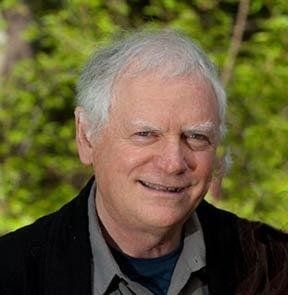
Over the past several months we have shared interviews about different people’s Montessori journeys. You have heard about the journey of Shawnaly Tabor, who was a Montessori child, then parent, and now teacher. Most recently we shared the perspective of two adolescent siblings, Emet and Neshima Vitale-Penniman, who attended Montessori schools through eighth grade. Today we bring you the story of a leader in the Montessori world: Dr. Philip Snow Gang.
Phil (as his students call him in the interest of breaking down traditional hierarchical boundaries), began his career as an engineer. Along the way, he became a Montessori educator, a global advocate for holistic education, and the founder of The Institute for Educational Studies (TIES). TIES is a master’s degree program that is truly an opportunity for adults to experience a Montessori education for themselves. His Montessori journey is an inspiration.
How did you initially become aware of Montessori education? Many of us feel a profound internal shift when we begin our Montessori journey. What was that like for you?
Well, it was through my children. When they were born we were interested in finding an appropriate environment for them. The Montessori school was very close to our house. Our neighbor across the street was the librarian at the school. We started reading about it and it captured my attention. I was always taken back by the serenity of my children after spending the day at school. I remember when my son was four, I said to the guide, “Warren is very sensitive,” and she responded with, “The world needs sensitive people.” And I sat with that, because up to that moment I was looking at sensitivity not as an asset.
Then the thought of hanging out at school; helping them do odd jobs, fixing furniture. There was something about being in that environment that was attractive: an embodiment of something you wouldn’t find in ordinary school. It not only came from the way the environment looked, but it came from the heart of the teacher and her attitude toward the children (or his).
We had one of the teacher’s to the house for dinner on a Sunday afternoon and I said, “You know one day I might like to be a Montessori teacher.” And he said, “Why not now?” At that moment I just laughed - not a joke laugh but an internal ‘could I do that?’ Six weeks later my whole family was in Italy studying Montessori. That’s how I jumped in.
You co-founded The Institute for Educational Studies (TIES) with your wife, Marsha Snow Morgan. TIES is currently affiliated with Endicott College and is widely regarded as “Montessori for Adults”. What inspired you both to create the program?
TIES was actually created before Marsha and I were together. There was an organization created in 1987 to promote holistic education in the world. In 1989, I along with seven other people met to see if we could bring together holistic education organizations from all different paradigms and we had a meeting in Chicago. Out of that came the Global Alliance for Transforming Education with ten principles.
I was the executive director and given that role I began traveling around the world giving lectures and presentations on those ten principles. Wherever I went people would say, “Where can I get an education that embodies those principles?” In the early ‘90s I was on the faculty in one of the first online programs in the country, and one of my students said, “Phil, you really ought to start a master’s program, because that’s where it’s really needed, so teachers can have access to this information.” So between that inspiration and by then Marsha and I were together and had worked on some courses together, we started planning for this program. I wanted, right from the get go, for it to be an online program. I knew there were people around the world who were interested in this. We’ve been doing it that way now for 23 years.
Dr. Montessori laid forth her ideas for the four planes of development, which examine the developmental markers of humans from birth through age 24. What are your thoughts on the possibility of additional planes of development? In what ways might we further explore the relevance of Montessori philosophy in how it relates to the lives of adults?
I have this suspicion because of what happened in my own life, that something happens to people between 24 and 30 that sets them on a different course in their life. It may not happen straight away but the seeds are planted. So I began asking people to talk about anything that happened in their life between 24 and 30. I asked enough people that I have a general feeling that there is something during that stage of development that is a calling forth within our psyche to do our Great Work (or as Montessori called it, our Cosmic Task).
Montessori thought that if a child were educated in a Montessori environment from birth to 18 they would be ready to, as she put it, go to a university. She was thinking of university in a kind of a medieval sense where the ‘new human’ would be established. My sense is that happens later in life, when we really get in touch with what our inner calling is. For me, it was the epoch of my children being born, there were peace demonstrations, civil rights demonstrations, and it was my introduction to Montessori. That was between 24 and 30 and I acted on it when I was 32.
What has your Montessori journey offered you, personally, as a learner?
I think it has changed over time. In the beginning my focus was how do I take all of what I’ve learned and convey that to the children? Montessori’s vision unfolded through observation. She didn't’ go about creating a method of education seeing how that would work with children. She observed children in a natural, prepared environment and she created materials and lessons to meet their needs. She added psychological preparation for the teacher so the teacher could step out of their own conditioning and observe, without coming with conditioning from your own education or your own parent upbringing, but looking at the children at every moment and saying, “What need is being displayed? What do I need to give that child to satisfy that need?”
It has taught me, in essence, it has seeded my own personal development towards cosmic consciousness through self- and other-awareness. Montessori spent the years from ‘69/’70-’77 in India, and that dramatically shifted her consciousness. She was embedded in a very sacred environment with all the great religions there, and she met with many different spiritual people. She connected this idea of cosmic education...she had been talking about it in terms of how everything in the world is integrated. Everything in the universe is integrated. At first she taught this to her teachers just for their own understanding, but eventually she found a way to present this idea of cosmic education to children so that they can understand that each entity in the cosmos including human beings has a cosmic task, and part of that is giving back.
Another educator we interviewed encouraged parents to expect discomfort and to accept and sit with it as they move through the process. This sounds a lot like your ideas that we must explore unconditioning and normalizing. We must unlearn our past conditioning and work ourselves into a new way of being. In your book you say: “At moments that trigger stress, sometimes binding, emotional memory overcomes practice.” What might you say to parents who are just beginning their Montessori journey? What might unconditioning and normalizing look like for them?
The most immediate words that come to me are ‘trust the process’. But, you know that wasn’t my reaction as a parent. I didn’t have any doubts about what they were doing. I just saw my child and the transformation in what was happening and I had total trust in the process. It was magic to me. As a matter of fact I wished I had had that in my life. I remember early on, when I was still an engineer, the teacher recommended I read The Secret of Childhood, because that was a good beginning book. I read it, and I’m driving home from work, and I actually had this internal disembodiment, and I had to pull over on the side of the road. I realized that nobody knew who I was as a child. If I had been educated like this as a child my whole life would have been different. So my parents raised me the way they had been raised. They were children of immigrants, so they were raised with old country ways in the new country, and all of us want a better world for our children.
Here’s how it works to me: When I get some kind of message that something feels uncomfortable, I kind of pause for a moment and ask myself where the discomfort is coming from. It didn’t originate in this moment. It came from something else. You have to take a moment to think about why that moment comes up for you. And if it still comes up for you, you have to talk to the teacher.
You are an advocate for using dialogue to “help catalyze a non-hierarchical, non-adversarial community of learners” between faculty and students in the TIES program. How might school communities (teachers, administrators, parents, community members) attempt something similar?
The first step is understanding it’s not about defending positions and views, but about listening and hearing each other. So often you’re thinking of what to say while the other person is talking. In the online environment, you get a chance to read what the other person is saying, pause, reflect, and then respond to what the person is saying. So how can we pause our thinking and reflect in a school environment without thinking, “I’ve gotta get my question answered. I’ve gotta raise my hand.” It’s the art of listening.
To learn more about Phil’s journey, as well as his forthcoming book entitled Educating for Right-Action and Love: Extending and Expanding the Montessori Vision, visit his website here.