150 Years: The Power of the Story, part 1
This article is part of a series that we will share throughout the 2020-2021 school year to celebrate the 150th birthday of Dr. Maria Montessori. Check back often for more posts that reflect on the past, present, and future of Montessori education.
Every Montessori journey is a bit different. For some, it starts during childhood as a student. For others, we begin as adults, either in the role of a parent or educator. Sometimes the journey may seem brief, yet what we learn becomes woven into who we are. Other times, Montessori philosophy drives our life’s work.
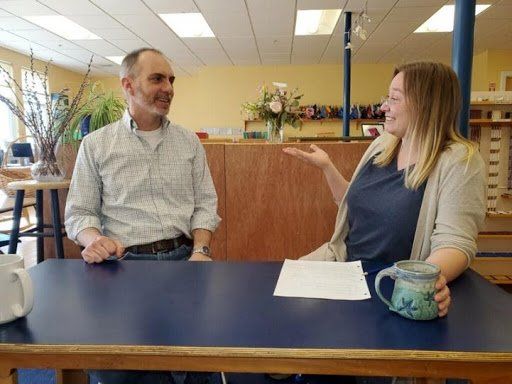
Over the next several months we will be sharing interviews to highlight a few of these journeys, each from a different perspective. Today we will share that of Shawnaly Tabor, M.Ed.. Shawnaly currently teaches lower elementary at Damariscotta Montessori School in Nobleboro, Maine. She attended Kalispell Montessori School in Montana (now called Woodland Montessori School) as a child and later found herself returning to the method as an educator. We think you’ll find her story fascinating and inspiring.
You were a Montessori student as a child. What was that experience like for you? What were some of the lessons, experiences, or feelings you can recall from your time in that type of learning environment?
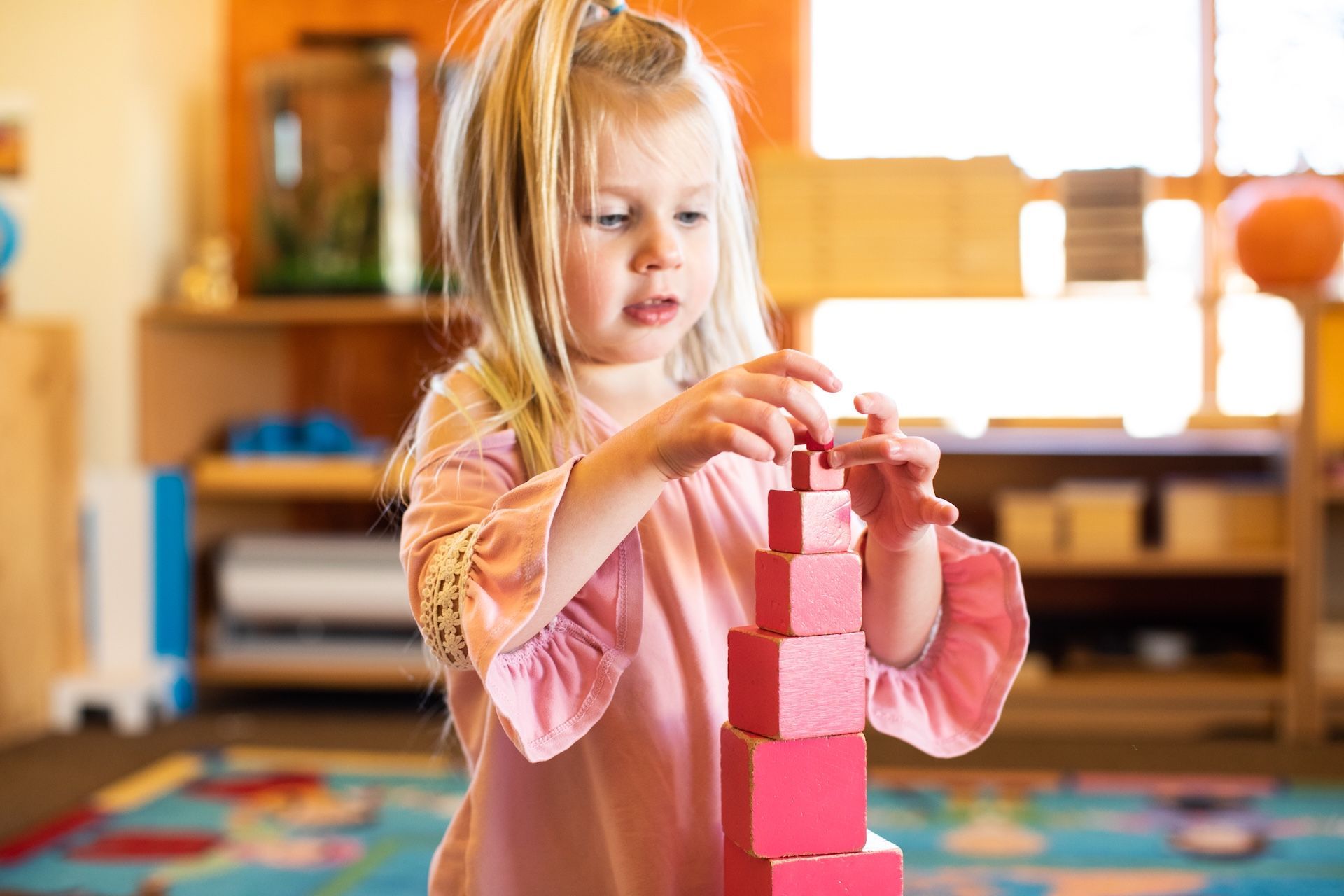
One of the strongest, most clear memories I have from being a young Montessori student was in a primary classroom. I had been given a lesson about the golden beads and I clearly remember holding the thousand cube after the lesson and there was sun coming in the window and it was one of those early thousand cubes - they were all the ceramic glass - and so I remember it being a little bit shiny and glittery in the sunlight, and I remember holding it and thinking, “Wow. This is a thousand.” It was so special and I can clearly remember it, and I remember the weight of it, and then looking at it because it was made of all of the individual beads. I remember kind of peering into it to see if I could if I could see beads in between the bead gaps.
Then when I was a little bit older in upper elementary, I remember the Timeline of Life. It showed from simple life-forms through dinosaurs and eventually to humans with pictures, and I remember I was amazed by the beauty of it and the complexity of it and then also how small the human section was at the end.
Are there ways in which your years as a Montessori child colored your experience in other types of educational environments?
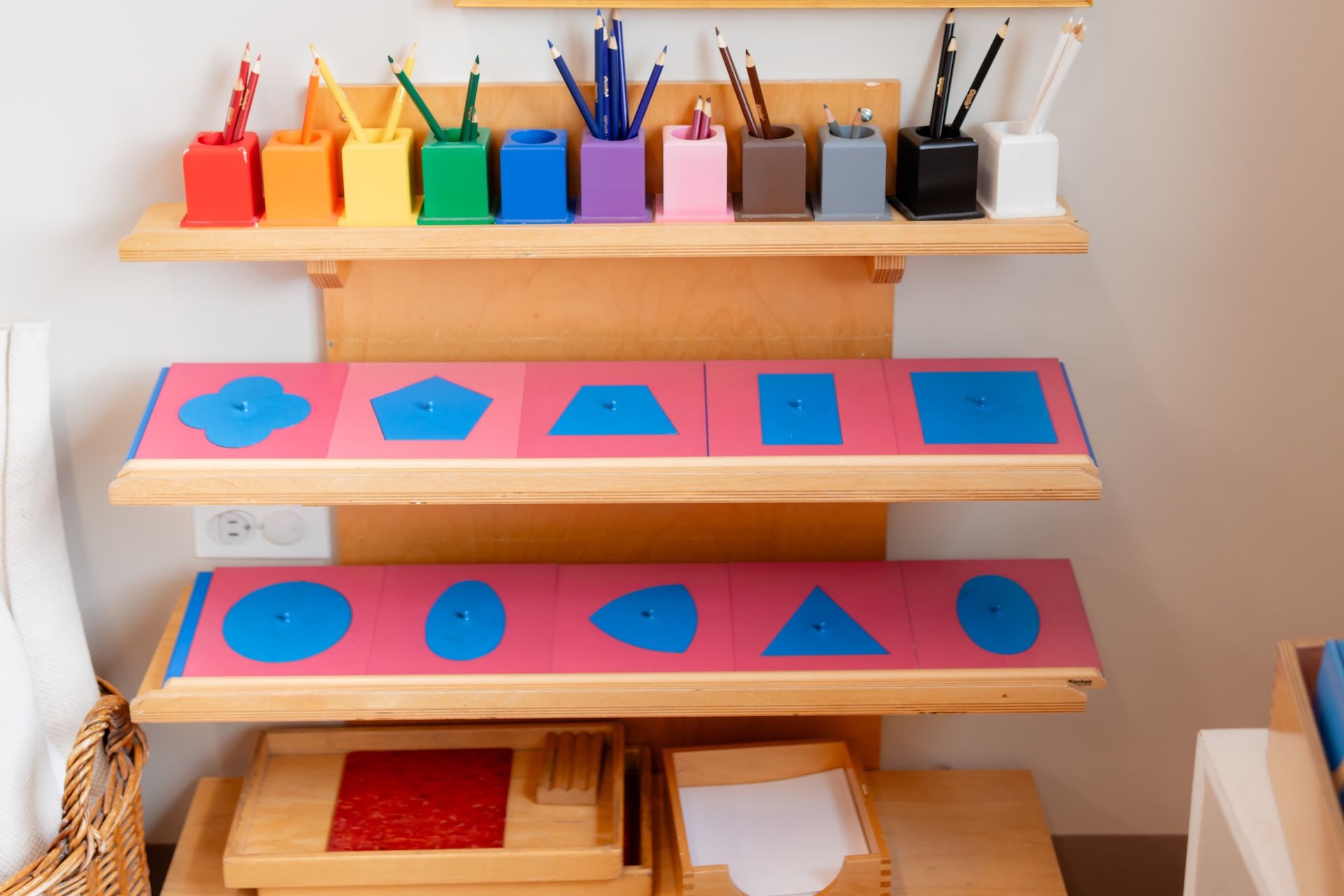
When I got into public school math classes I really enjoyed math and I felt like I understood it well. When the teacher was talking about different concepts, I would get pictures in my head that would help me understand it. At the time I didn’t really realize what was going on until I went to my Montessori training and I was reacquainted with the materials. I realized that through middle school, high school, and even college that I had been picturing a version of what I remembered of the Montessori materials. Working with them really formed a picture in my head that helped me understand math better.
Socially it was a tricky transition, but I realized that it was a tricky transition for everybody. In the valley that I’d lived in there were many small elementary schools and in the seventh grade everybody transitioned to this great big school. Everybody was having the same experience as I was, moving from a small environment to a big environment. I feel like the years I spent working in a Montessori school on independence, self-confidence, and academic skills helped support me through what could have been a really scary experience. Because the academics seemed a bit easier, I was able to make friends, and it helped my transition be easier. And I started to find the excitement within the transition, and I really enjoyed learning.
What led you to your Montessori training? What was training like for you? You mentioned that you had your former teachers as some of your training instructors.
Yes, I was able to come back and be an adult with my Montessori teachers. It was a very interesting experience. One of them had saved something I had written from when I was a child and brought it out during one of the lessons as an example. It was very special, and a little bit silly, and a little embarrassing, but it was wonderful to see them again and to have them as mentors in a new way.
After I received my public school certification and completed my student teaching there, I became aware that I did not want to stay in that system. I debated options, but I decided I wanted to work in the private sector. I researched different options and observed in different schools, but I found my heart was still in the Montessori realm. And that was where I wanted my son to be.
At the time I went to training my son was three and had started going to the Montessori school I went to as a child, too. It was being a parent that really led me back to Montessori.
What has teaching in a lower elementary environment been like for you? What keeps you returning to the classroom each year?
The kids are so amazing. The way that they see the world and the way that they approach life is different from adults. They don’t have the same life experience and a lot of things are new to them. They’re excited about learning; they’re excited about life. They wear their emotions right in the front, so there’s an emotional honesty working in the lower el. Sometimes it’s really messy but it’s always really beautiful.
The kids have this amazing ability to learn to focus on solutions and they also have this amazing empathy for other people. I would say that every child I have worked with has this beautiful empathy for other people, and it’s just wonderful.
They also say really interesting things, and it’s always from this beautiful kid perspective. I just love it. It’s also the age when they start to develop their sense of humor. The way it develops from first grade to third grade is really fun to watch.
You were a Montessori parent as well. What is your advice for families who are just beginning their journey?
For me it was familiar (the Montessori realm), but for most people it isn’t. So, one of the most important things to know as a Montessori parent is that you’re going to be confronted with a lot of ideas that might be uncomfortable simply because you aren’t used to it. It can feel more abstract because there aren’t grades, and there isn’t a ‘where is my child at according to other children’ mentality. All the kids are on their own track and we treat them as individuals and try to provide what each child needs.
It can feel disconcerting because it isn’t familiar. Even though research shows that it’s really awesome for kids, it can be really uncomfortable for parents. Just be brave and know that you’ll feel that way, and that’s okay, and the teachers are there for you. In a Montessori school it’s different; the teachers are there for the parents, too. We’re all on the same team for your child. They will be there to listen and provide anything the parent needs, as well as the child.
Montessori schools tend to be beautiful, emphasize peace, nature, and social-emotional learning. From the outside, they can look like magical places where everyone is always happy. However, it's important to understand that not every day will be perfect and that the path of development is often difficult and messy. This is okay. Teachers, children, parents, and all other school personnel are humans. We have emotions, make mistakes, and aren't perfect. What Montessori schools do have is a focus on growth and seeing mistakes as part of the path toward improvement. We accept each other on our bad days, just as openly as we accept each other on our good days. The magic in Montessori is not being a perfect, happy environment, it's in seeing the messiness as an aspect of the beauty.
Can you share a bit about your work with Positive Discipline and how you feel the model fits in with Montessori education and parenting?
Yes, it isn’t in every Montessori school even though it does dovetail perfectly. Just like Montessori, Positive Discipline focuses on ways to help the children be independent, resilient, builds communication skills, and self-regulation. What Positive Discipline has is the direct tools for classroom management. We all want children to be independent and resilient, but Positive Discipline offers a how-to guide, almost. It takes the philosophical concepts we all strive for and make it more concrete, so it’s accessible to teachers and parents.
Like with Montessori, it’s focused on long-term change. We want a better society; we’re guiding human beings. Positive Discipline also has that long-term focus. We don’t want to just stop a behavior or start a behavior, we want to help the child develop to be the best human being they can be. It can help those of us who didn’t grow up with those tools, especially in times of stress.
Is there anything else you would like to discuss regarding your personal journey with Montessori education?
It’s been a really impactful thing in my life, even during the times when I didn’t realize it. Sometimes in the moment we don’t realize where we get our strength or resilience, but when I look back a lot of the times when I’ve had something challenging happen - as we all do - I can see how the social-emotional or academic skills that I learned in Montessori have bolstered me through the challenging times. It’s become a foundation and the fabric of who I am, and so even when I don’t realize it, it’s still with me, and still supporting me.
We hope you all enjoy reading this Montessori Journey!
Warm regards,
Candice Lin, Director
info@jordanmontessori.com