A Montessori Science Experiment for Summer: What Do Plants Need to Survive?
LakeCreek Montessori School • June 24, 2026

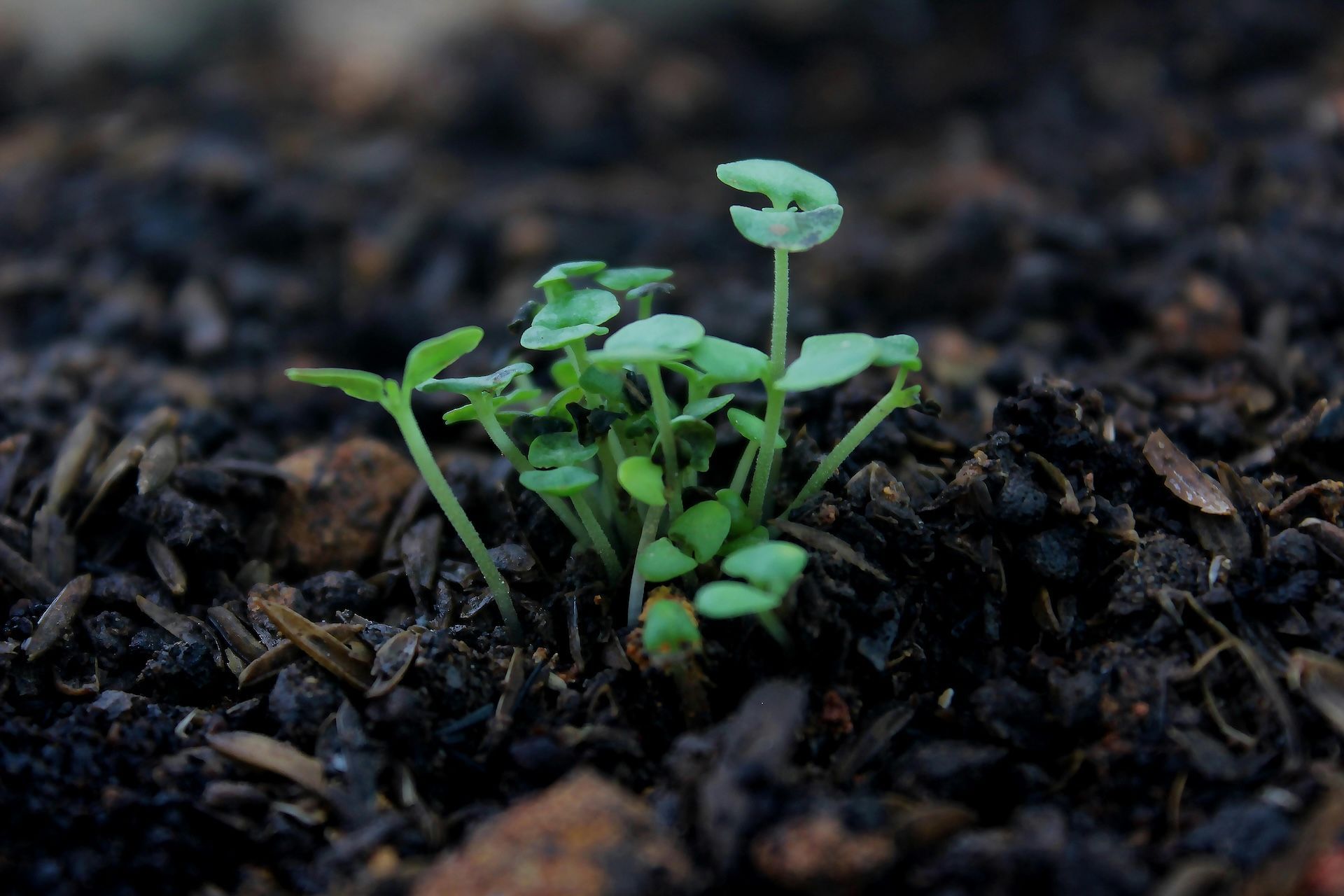
Summer is the perfect season to explore the question: what does a plant actually need to survive?


Rather than focusing on abstract information through books, this is a chance to really experiment with our children. What happens to a seedling when you take away its water? Its light? Its warmth? What if you give it everything? What if you give it almost nothing?


The Needs of the Plant is an activity we explore with younger elementary children, and it is perfectly suited to summer at home. The activity requires almost no materials, takes only minutes to set up, and keeps children interested over the course of a week as they observe, record, wonder, and discover fundamental truths about the living world.


The Idea Behind the Experiment


In Montessori, we don’t take a textbook approach to science. Instead, children encounter scientific concepts through direct experience. They use all their senses to carefully observe real things as they change in real time. The Needs of the Plant experiment embodies this approach.


The premise is simple: plants need certain things to survive. Most children know this in a general way. But knowing it in a general way is entirely different from watching it happen. In this activity, children care for four small seedlings over a week and see, with their own eyes, what flourishes and what doesn’t. In the process, children get to build their understanding of why.


The experiment also introduces children to an important concept in science: the control. One plant receives everything (water, light, and warmth). The others each go without one of these things. When children compare what they observe at the end of the week, the control makes the comparison meaningful and sets the foundation for scientific thinking.


What You'll Need to Try This at Home


The materials are simple. You’ll need four small containers or bowls, cotton balls, four small seedlings (lettuce seedlings work well as they are fragile enough to show results within a week), water, labels, and a notebook for recording daily observations.


A few important notes before you begin: choose seedlings rather than seeds, as seeds actually benefit from darkness while sprouting and won't give clear results. Avoid hearty plants like cacti, which can tolerate almost anything. You want plants that will respond visibly to their conditions. And choose four seedlings that are as similar to each other as possible, so the only variable is what each one receives.


Setting Up the Experiment


Gather your children and your four seedlings and talk through the setup together. Begin with a conversation. What do we think plants need to live? Water almost always comes up first. Light? Warmth? Let the children's ideas lead the way.


Then set up the four bowls:


Plant One — the control: Place damp cotton balls in the bowl, nestle the seedling inside, and label it: Water, Light, Heat. Find a warm, sunny spot for this one and assign a child to water it every day. This is the plant that gets everything.


Plant Two — no water: Set up the bowl with dry cotton balls and label it: Light, Heat — No Water. Place it beside the first plant in the same sunny, warm location, but do not water it at all.


Plant Three — no heat: Set up the bowl with damp cotton balls and label it: Water, Light — No Heat. Find a cool location — a shaded spot or a cooler room — where it will still have light but significantly less warmth. Water it daily, but keep it cool.


Plant Four — no light: Set up the bowl with damp cotton balls and label it: Water, Heat — No Light. Place this one inside a cupboard or covered box where it receives no light at all. When watering it, open the cupboard quickly and close it again so the plant is exposed to as little light as possible.


One important reminder: the goal is observation, not destruction. If a plant appears to be in serious distress before the week is up, it's perfectly fine to end its part of the experiment and move the seedling somewhere it can recover. When the experiment is complete, consider planting all four seedlings in a garden or pot where they can recover and continue growing.


The Daily Practice: Observing and Recording


The daily act of looking closely and writing down observations is where the real learning happens. Give your child(ren) a simple notebook and invite them to visit each plant every day and record their observations. What does the plant look like today? Has anything changed? What do the leaves look like? Is the stem standing upright or beginning to droop? Has the color changed?


These questions are invitations to notice. When our children visit four plants every day for a week and truly look at each one, they are developing powers of observation that will serve them in every area of science (and in many areas of life) for years to come.


After a Week: What Did We Discover?


When the week is up, gather the four plants and have a conversation. What happened? The plant that received everything (water, light, and warmth) should be thriving. The others will each show the effects of their missing need in different ways.


Let your children lead the discussion. What do they notice? What surprised them? What do they think would happen if they continued the experiment for another week? What would happen if they moved the plants back to normal conditions?


Then, together, draw the conclusion that the experiment has demonstrated: plants need water, light, and warmth to survive. And alongside those three things, introduce two more: minerals, which the plant draws from the soil through its roots, and carbon dioxide, the gas from the air that plants take in to make their food.


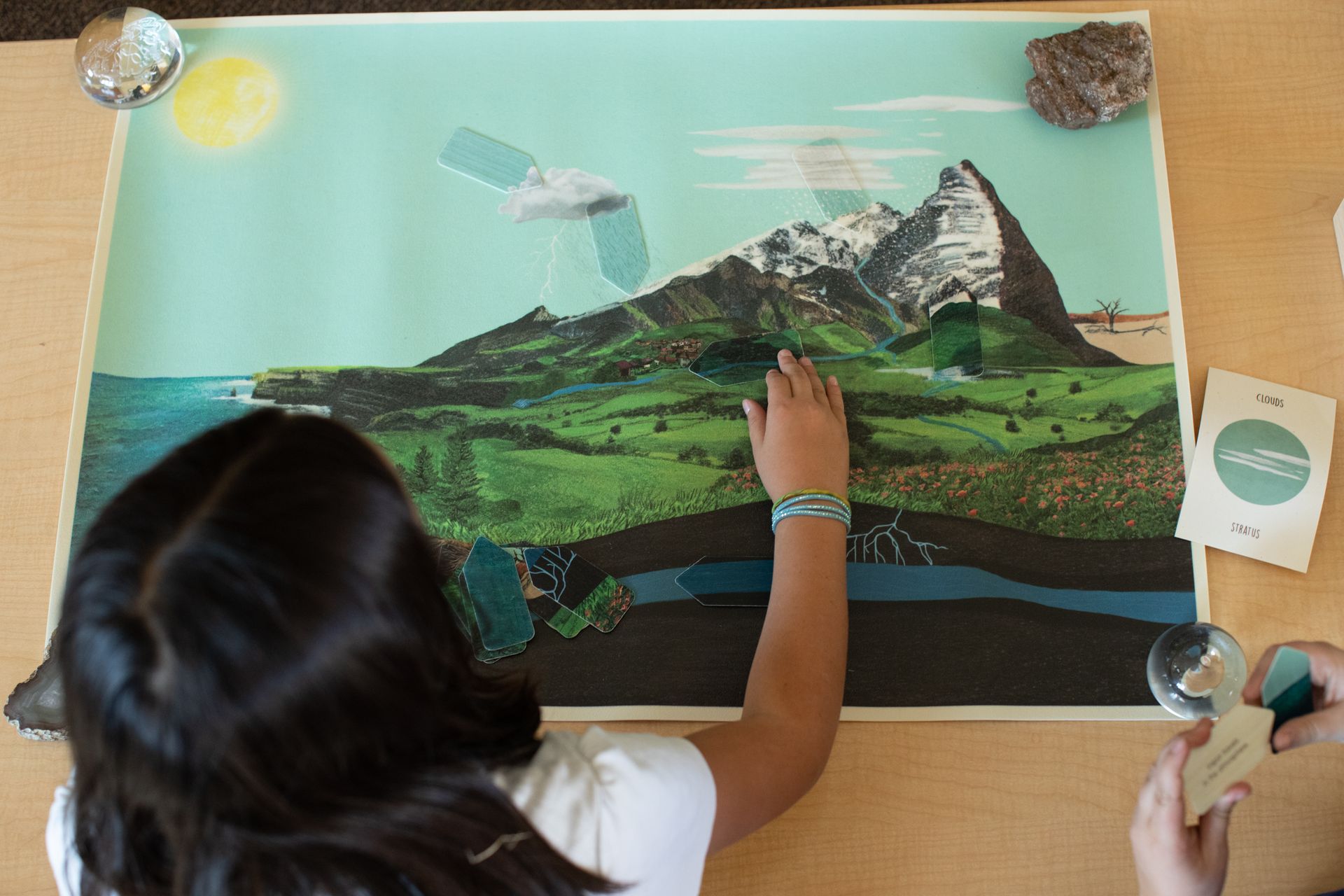
In the classroom, we use an impressionistic chart to show these needs: sunlight, water, carbon dioxide, minerals, and warmth. This is a way to close the experiment and give children a visual framework for what they've observed.


Why This Matters Beyond the Science


Caring for a living thing over a period of days reinforces children’s attention span, builds patience, and strengthens the habit of noticing small changes. This practice is at the heart of genuine scientific observation.


The process also helps children develop a sense of responsibility toward the living world. Children who have watched what happens to a plant when its needs are not met understand, in a visceral and personal way, that living things depend on their environments. That understanding is the beginning of ecological awareness.


A Note for Older Children


If you have children between the ages of nine and twelve, summer is a wonderful time to extend this experiment into a deeper exploration of what plants actually take in from the soil: the macro-nutrients like nitrogen, potassium, calcium, magnesium, sulfur, and phosphorus that plants need in significant quantities, and the trace elements (iron, zinc, copper) that are needed only in tiny amounts but are just as essential. This can lead to early explorations of chemistry, the periodic table, and the building blocks of life.


For now, though, four bowls on a windowsill, four seedlings, and one child with a notebook is more than enough! We hope your family has a season full of curiosity and discovery. We look forward to hearing what you found and welcoming everyone back to the classroom in the fall. As always, come visit the school in LakeCreek Montessori School to learn more about cultivating scientific thinking!
By LakeCreek Montessori School June 24, 2026
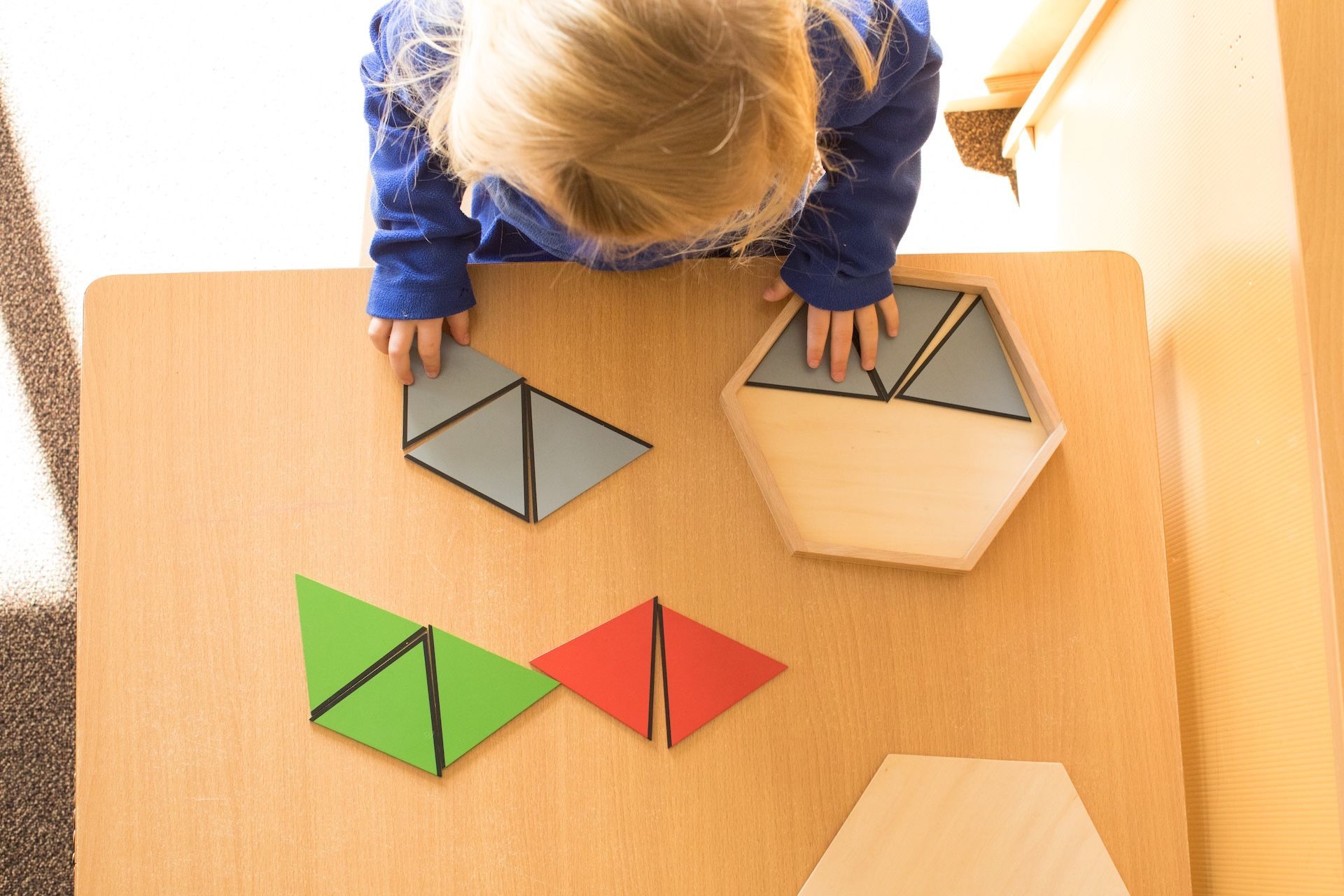
Have you ever watched a child trace the outline of a window with their finger, or carefully line up blocks into a perfectly symmetrical row? They may not have a name for what they're doing, but they are already exploring geometry. Dr. Maria Montessori understood that geometry is not an abstract school subject. It is part of the world children live in from the very beginning. A glance at the typical geometry textbook might suggest otherwise. Formulas, diagrams, and definitions can feel remote and lifeless, something to be memorized and forgotten. But look around for a moment. There is geometry in the angles of a mineral crystal and in the symmetry of a butterfly's wings. There is geometry in the legs of a chair and in the steel girders of a bridge. Children encounter it everywhere! In fact, research suggests that a basic intuitive understanding of geometric concepts may be inborn in human beings. A fascinating study of the Munduruku (an indigenous group living in the Amazon whose language includes very few spatial or geometric terms) found that both adults and children demonstrated an intuitive grasp of basic geometric ideas. This isn't something they were taught. It was already there. Montessori classrooms build on exactly this kind of inborn understanding. From Sensory Experience to Big Ideas In the early childhood years, children work with geometry through their hands. Materials like the Constructive Triangles, the Metal Insets, and the geometric cabinet give children a felt, physical understanding of shape, symmetry, and form before we introduce any formal terminology. Children gather and store these impressions. Their minds are being prepared. As they get older and certainly in the elementary years, children are ready to bring names and reasons to what they already sense. Elementary-aged children don't just want to know what something is called. They also want to know why. Why is this shape called a pentagon? (Spoiler: Its name comes from the Greek word for five: pente.) Geometry becomes a doorway into the history of language, ancient Greece, and the lives of mathematicians like Thales, Pythagoras, and Euclid, who puzzled over the same ideas thousands of years ago. This is the spirit of Cosmic Education when we pull one thread of curiosity to find it unravels into history, language, culture, and mathematics! Geometry, Algebra, and Arithmetic Woven Together One of the things that makes Montessori's approach to geometry so distinctive is that it doesn't stand alone. In the Montessori classroom, geometry is part of a three-part approach to mathematics, interwoven with arithmetic and algebra in ways that make each of them easier to understand. The Binomial Square is a good example. It presents the algebraic expression of (a + b)² = a² + 2ab + b² as a geometric pattern of squares and rectangles that children can actually build and hold. The arithmetic follows the pattern. The pattern confirms the algebra. Each one reinforces the others, and the whole thing is far more memorable than just a formula written on a board. Open-Ended, Creative, and Genuinely Fun Plus, a lot of Montessori geometry work has no single correct answer. We invite children working with the Metal Insets or Constructive Triangles to find as many equivalent figures as they can for a given shape. There may be dozens of ways to approach the same problem. This open-endedness nurtures the creative, analytical thinking that elementary children are hungry for. Plus, this quality of thinking will serve them in every area of life. Compass-and-straightedge constructions are another example. These beautiful, precise drawings challenge children in a way that is both mathematical and artistic. Many children find them deeply satisfying. What This Looks Like at Home You don't have to wait for the classroom to feed your child's geometric curiosity. Point out the shapes in a honeycomb. Notice the angles in a spider's web. Talk about the tiles on the floor or the panes in a window. Ask your child questions. Do you think that could be a triangle? How many sides does it have? These small moments of noticing are the same thing Montessori described when she wrote about preparing the environment to reflect the world children already live in. Geometry is already there. We're simply helping children see it. Come visit us in LakeCreek Montessori School to see how this unfolds in the classroom and to watch children fall in love with one of humanity's oldest ways of understanding the world.
By LakeCreek Montessori School June 24, 2026
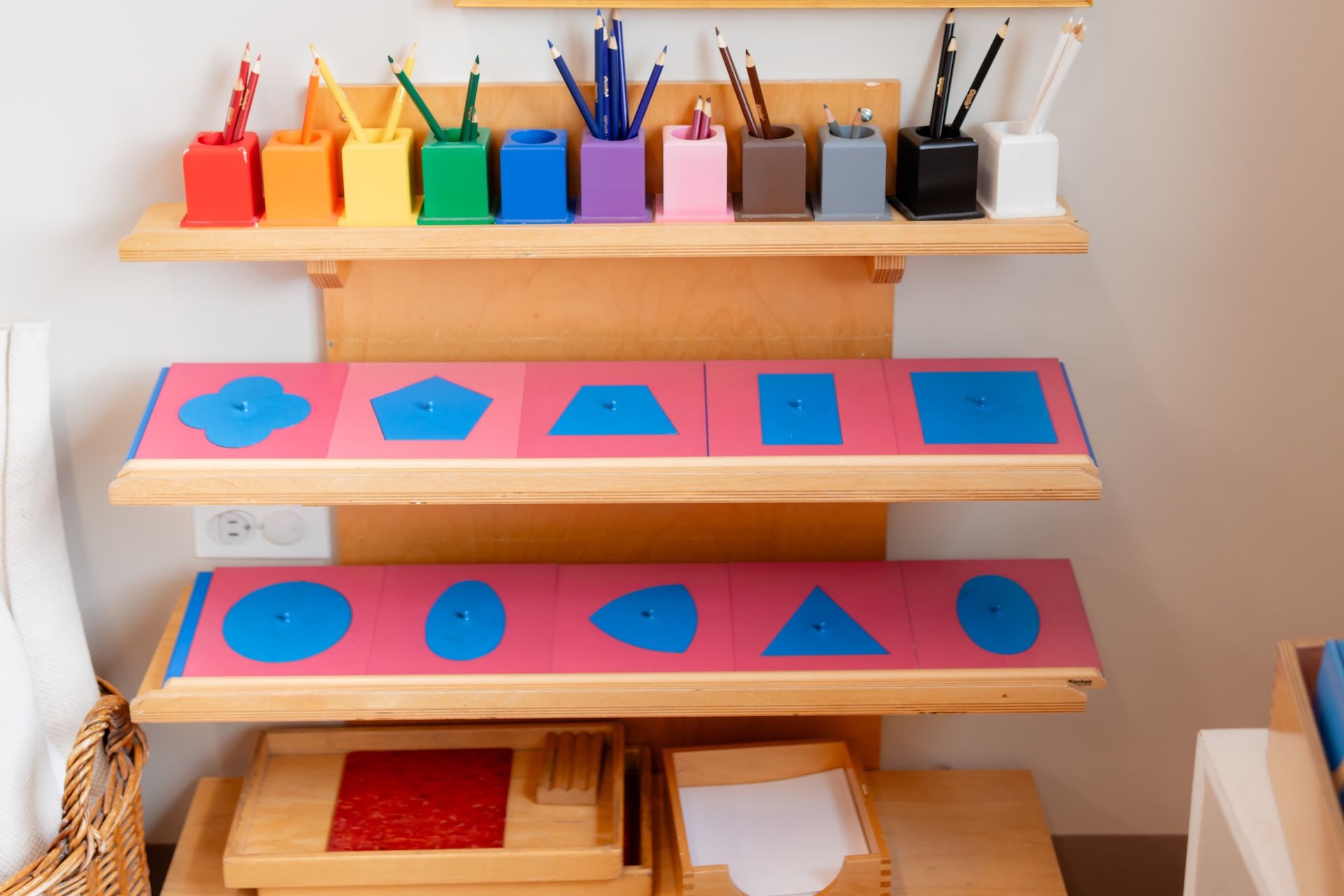
unfold over time. Children begin with a single frame and inset, using three colored pencils: one for tracing the frame, one for tracing the inset, and one for filling in. As their control deepens, subsequent exercises introduce the use of insets only (without frames), multiple overlapping shapes, repeated tracings of a single shape in different positions, and eventually fully free geometric design using any combination of insets, colors, and orientations. One of the most beautiful exercises is graded color. Using a single inset and a single pencil, children fill the shape with vertical lines, moving from darker to lighter (or lighter to darker) by adjusting the pencil pressure. This exercise requires an extraordinary sensitivity of touch, and when children achieve it, the result is genuinely lovely. This work can continue throughout a child’s entire time in the Children’s House. It can be relaxing and meditative, and when older children do it with great refinement, it naturally inspires younger children who observe them. Readiness and Timing Two key preparations precede the metal insets. Children should be able to trace the shapes of the geometry cabinet and the leaf shapes of the leaf cabinet using a stylus, and ideally they should be working with the movable alphabet. Timing matters. If we introduce the work too soon, before the hand is ready, it becomes too great a challenge rather than a satisfying one. The guide’s role is to observe carefully and to offer the presentation at the moment when it will be received with both readiness and joy. The metal insets are a landmark in the child’s journey toward written language. This layered preparation honors both the intelligence of the hand and the unhurried nature of true readiness. We invite you to come see the metal insets and the full breadth of our carefully prepared environment in person. Contact us to schedule a visit here in LakeCreek Montessori School or to learn more about life in our Children’s House.
By LakeCreek Montessori School June 24, 2026
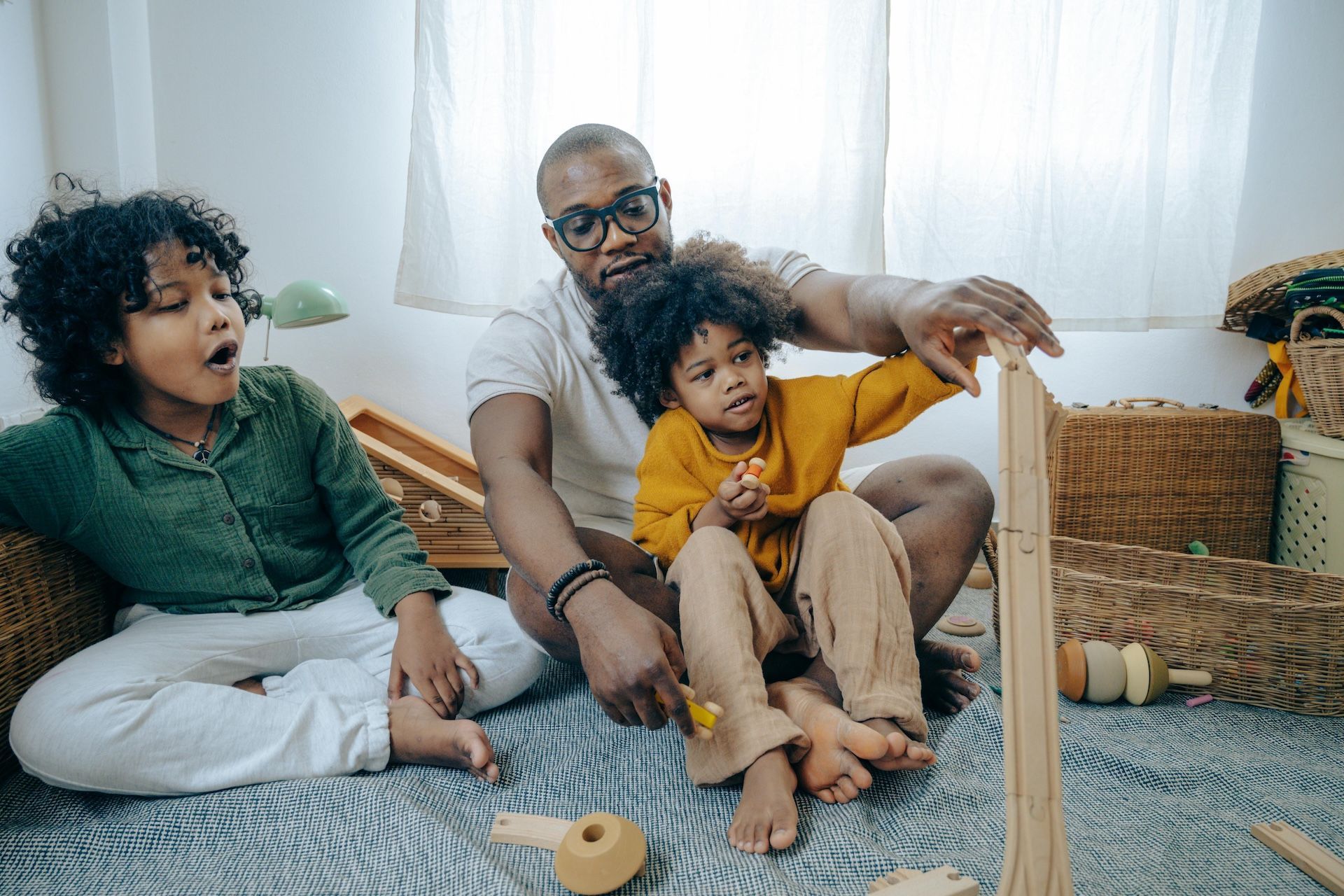
Have you ever stumbled upon your children acting out an imaginary scene? Perhaps you've found them "playing school" or witnessed them use a Lego person to boss a Beanie Baby around a bit. Play is a way for children to process and make sense of their lives. They need play, and as Lawrence J. Cohen, PhD, so eloquently explains in his book, Playful Parenting, children need the adults in their lives to play too. Filling the Emotional Bank Account Let's be honest, though. Between feeling sapped from work or drained from the hustle and bustle of getting our kids from here to there, we don't often default to "let's romp around and have some fun." Instead, we're likely to feel a little annoyed when our children's play gets a little too rowdy, or when they don't want to stop to come to dinner. Yet by engaging playfully, we can actually create more closeness, cooperation, and confidence in our children. If we think about how our children have emotional bank accounts, we can make deposits to those accounts, much as we do when we put money into our financial accounts. Those deposits can take the form of hugs, appreciations, reading together, and really whatever strengthens the connection. Withdrawals are those actions that weaken the emotional connection: sarcastic comments, failure to remember a promise, acting maliciously, and so forth. The emotional bank account is a useful metaphor because it reminds us that connection is cumulative. When our emotional bank accounts are full, a little withdrawal here and there doesn't feel so bad because there's plenty of cushion in the account. But when our emotional bank accounts feel drained, a small withdrawal will feel even more hurtful. Is Your Child's Cup Running Empty? Cohen has a similar description in terms of establishing our connection with children. He describes how children (and really adults, too) need their cups filled. A child's need for attachment is like a cup that gets emptied by being tired, hungry, hurt, or lonely, and then refilled by being loved, cuddled, encouraged, and even fed. Cohen suggests looking at children's behavior and thinking about these "cups." Is a child running around desperately trying to get a refill? Is she bouncing off the walls in the process and even spilling what little is in her cup? Does a child have a leaky cup, always needing more attention but never feeling satisfied? Is the child who really needs a refill blocking others from giving him just what he needs to feel better? When our children need their cups refilled or deposits in their emotional bank accounts, it's time for us to re-establish connection. And a very effective way to rekindle that connection is through play. Follow the Giggles The play doesn't have to be elaborate, though Cohen advocates that working toward extended playtime with our children will create healthier family environments for all of us. Really, though, the playfulness can be as simple as acting a little silly. Cohen's tenet is to "follow the giggles." It's actually pretty amazing how effective following the giggles can be, even for those of us who have a hard time letting ourselves go in the playful department. One of Cohen's suggestions is to reverse the roles we typically play. Instead of being the one who doles out reminders about what needs to happen, we can try to stamp our feet and whine that we don’t want to clean up. Sure, we might feel a little goofy right after, but when we hear our kids start to giggle and we know we are on the right track. We can use the experience to try one of Cohen's other suggestions: to weave in alternatives for how a particular situation can play out (no pun intended!). In the example, after we whine and moan about cleaning up, and our child (playing along, of course) says that clean up absolutely had to happen, we can pout a little but then shift gears, "Okay, okay. I'll pick up my things." Reversing the roles offers an opportunity to suggest, without having to lecture or be didactic, a new storyline for how our children can respond to a clean-up reminder. Playfulness as Proactive Discipline Cohen's work on playful relationships with children really extends how we can approach discipline. First, playfulness is proactive. We're filling cups so children don't resort to unpleasant behavior to get our attention. But there's more to the playful approach. Another of Cohen’s suggestions is to have a "meeting on the couch." Rather than launch into a reactive, habitual response, we can call for a couch meeting. This is a great strategy to implement when sibling rivalry has erupted for the umpteenth time. At first, our kids might not know how to respond. Even the mention of couch-time, though, can diffuse the intensity of the moment. The couch symbolizes snuggles and comfort, not harsh discipline. And that's the point. Being together on the couch can help everyone relax. We might find ourselves better able to sit back and listen. Our children might be better able to share ideas. The next thing we know, our children are back playing again, happy with the arrangement they negotiated. Cohen's book, Playful Parenting, is full of valuable tools like these. A Note on Montessori and Play It is worth mentioning, though, that in the last paragraph of the book, Cohen takes a Montessori quote out of context. In an email exchange, Cohen graciously admitted that he wished he hadn't misunderstood Dr. Maria Montessori's words about work and play. Dr. Montessori's writings about work and play have many subtleties. She wanted to emphasize that children are drawn to meaningful activities, and using the term "work" rather than "play" helped validate their choices. Despite this minor misuse of Montessori's words, Cohen’s book is highly applicable to Montessori families. The essence of Montessori philosophy is about respecting our children, recognizing what they need from their environment, and following their lead. This is exactly what Cohen advocates, too. His insight into how we can approach interactions and connections with lighthearted yet meaningful play can benefit us all. For more information about Cohen's work visit: www.playfulparenting.com. To learn more about Montessori and how this approach aligns with what we do in the classroom, visit us in LakeCreek Montessori School .
By LakeCreek Montessori School June 24, 2026
With the slower pace of summer, more time at home and outdoors, and more unstructured hours to fill, it’s a perfect time to pull art supplies out fo the closet, cover tables with paper, and unleash some creative energy! What happens in these creative moments matters more than most of us realize. And how we respond to what children make matters just as much as the making itself. The Process Is the Point A foundational principle behind Montessori's approach to children's artmaking is that the process of making art is far more important than the product. This can be difficult for us to internalize, because the product is what we most often see. It’s not that we don’t care about our children’s experience. But the painting is what comes home. The drawing gets taped to the refrigerator. We get handed the collage at pickup. So it’s natural to focus on what is right in front of us. But it is the moments when children are deeply absorbed in moving paint across paper, pressing clay between their fingers, or scribbling long, looping lines with a crayon that something essential is happening. This is a deep form of creative expression and an outlet for feelings children may not yet have words for. Plus, children are developing visual-spatial skills, fine motor coordination, and the capacity for innovative thinking. During art-making, children are problem-solving in real time, making decisions about color, form, pressure, and space. And they are experiencing the deep satisfaction of following an internal creative impulse all the way through to its end. What Not to Say and What to Say Instead One of the most important things we can do to support young children's creative process is to be thoughtful in our comments. Even well-meaning responses can shift children's focus from their own inner experience to an adult's reaction. Once that shift happens, children begin making art for the audience rather than for themselves. Comments like, "That's beautiful!" or "What is it?" or "Can you make one for Grandma?" are all, in different ways, asking children to produce something for someone else or to explain and justify what they've made. Neither of these supports genuine creative development. Instead, focus on objective, process-focused observations. For example, "I can see you used a lot of green and purple today," or "Your lines extend all the way to the edge of the paper," or "It looks like you really enjoyed making that." These responses acknowledge children's work without judging it, and they communicate that what they made matters, and what they experienced while making it also matters. Young children often cannot (and should not have to) explain their art. The experience of making art is enough. A Summer Opportunity: Freedom to Explore Summer is an ideal time to offer children a real variety of creative materials and the freedom to choose what calls to them. Different children will be drawn to different media, and what each child gets from a new experience will be entirely their own. Variety is important precisely because it sparks different kinds of interest and expression in different children. Here are some starting points for summer art exploration, appropriate for toddlers and young children: Offer crayons and large paper for open-ended scribbling and mark-making. It’s best to begin by offering large spaces before moving to smaller ones. Large paper means that children's bodies have room to move freely. Easel painting or watercolors offer the joy of color mixing and the experience of a brush moving across a surface. Play-dough and clay can satisfy children's deep need to manipulate, press, and build with their hands. Collage materials (paper scraps, leaves, fabric, natural objects) invite children to arrange and compose in ways that feel both free and purposeful. Chalk on pavement (or dark paper, if the weather isn’t cooperating) is especially magical outdoors on a summer morning. From a practical standpoint, it’s helpful to protect clothing and surfaces before beginning, so children can work freely without worry (theirs or ours!). Choose non-toxic materials, particularly for the youngest children who may still explore things with their mouths. And resist the urge to direct the outcome. Children who cover their paper entirely in black paint are not doing it wrong. They are doing exactly what they need to do. What to Do With What They Make Not every piece of art needs to be saved or displayed. Saving a selection of artwork from across the summer (early pieces, middle-of-summer pieces, late-summer pieces) can serve as a timeline or record of your children's creative development and a meaningful way to look back together at the end of the season. If there isn’t room to display selected pieces, a simple folder or large envelope can also work perfectly for this. When you look through the artwork together, let your child lead the conversation or simply look at it together without words. The goal is never gallery-ready products. The goal is children who trust their own creative impulses, who feel free to experiment and make a mess and start over, and who carry the confidence of someone who has been allowed to make things in their own way. Summer is long, and the canvas is wide! Let children fill it however best suits their needs! We'd love to hear how your family is spending the summer months. And we always love to share how we support creative exploration in our prepared environments in LakeCreek Montessori School. Contact us to learn more!
By LakeCreek Montessori School June 24, 2026
Summer has a rhythm that the school year rarely allows. Mornings without a clock ticking. Afternoons that stretch and meander. The unhurried pace of days that don't need to be anywhere quite so urgently. And tucked inside all of that spaciousness is one of the most valuable gifts the season can offer young children: time to do things for themselves. In Montessori, we don’t rush through the practical life activities that help children care for their own bodies: washing hands, dressing, brushing hair and teeth, wiping a nose, and putting shoes away. We don’t even think of these as chores because they are among the most important developmental work in our children’s early years. And summer, with its slower tempo, is the perfect season to lean into them. Independence Is the Destination and the Journey Dr. Montessori understood that, from the very first moments of life, children are moving toward independence. The newborn who moves toward the breast has already taken a first step. That milestone transforms the toddler who learns to walk: their hands are suddenly free, they can move toward or away from people and objects in their world, and they can begin actively shaping their own experience rather than merely absorbing it. Every act of self-care that children learn to do for themselves is another step along this path. Not because independence is about doing things alone, but because the child who can care for their own body develops a sense of genuine capability, a trust in themselves, and a growing understanding of who they are as unique human beings. As the Montessori principle goes: Help me to do it myself. Collaboration Before Independence One of the most important things to understand about supporting self-care in young children is that the path to independence moves through a collaborative process. Often, things go awry when we swing between getting caught up in instruction, resorting to doing something for them, or stepping back entirely before they are ready. The progression looks something like this: first, we do the activity with or for the child, using gentleness and narration, so the child is always a participant, even before they can act. "I'm going to put on your shirt. Let's put your arm through the sleeve." Gradually, the adult and child do the activity together. Eventually, the child begins to imitate, then to do it in their own way, imperfectly, slowly, and with deep satisfaction. This progression is not a straight line. There will be days when a child who has been dressing independently for weeks suddenly wants help again. This is entirely normal and simply calls for a gentle return to collaboration: "Let's do this together." Our goal is always to offer just enough support and no more. We want to find the balance between honoring children's need for assistance and protecting their emerging sense of capability. What Summer Makes Possible The school year, for all its richness, is often defined by time pressure. Mornings, especially, can become a sequence of things that need to happen faster than children can manage them independently. Shoes get put on by adults. Jackets get zipped by adults. Hair gets brushed quickly and without much ceremony. During the summer months, there is often more space to let a three-year-old button their own shirt, however long it takes. There is time to stand back and watch a toddler figure out how to pull on their own socks. There is room for the unhurried back-and-forth of teaching a child to wash their hands properly, step by step, at a sink they can actually reach. If we think of these moments as children’s real work, we can avoid getting caught up in the sense that the process isn’t efficient! This is a long-term game. Our children are building their abilities and their internal sense of capability. Practical Suggestions for the Summer Months Here are a few ideas for bringing the Montessori approach to self-care into your home this summer: Set up the environment for success. Small adjustments allow children to manage their own needs without regularly needing adult assistance. Perhaps place a step stool at the bathroom sink. Provide low hooks for towels and clothing. Create a low shelf for children to store their belongings. Choose clothing that supports independence. Elastic waistbands, velcro shoes, and loose-fitting shirts can be respectful of children's current physical abilities. Children who can dress themselves feel capable. Narrate without taking over. When a child is struggling with a button or a zipper, resist the impulse to fix it immediately. Try instead: "You're working hard on that. Would you like to try once more, or would you like some help?" This keeps the child in the driver's seat of their own experience. Begin with larger movements, then refine. Just as with any practical life work, self-care builds from the general to the specific. Children learn to pull a shirt over their head before they learn to fasten buttons. They learn to remove their shoes before they learn to tie them. Follow your child's current capacity and build from there. Move without talking; talk without moving. This Montessori principle helps us demonstrate a self-care activity most effectively. When showing a child how to wash their hands, do it slowly and silently, so the movement is fully visible. Then, separately, use words to name the steps. Children often find it difficult to simultaneously track our narration and demonstration. Self-Care Activities Worth Practicing This Summer Consider the range of self-care activities appropriate for our children. Do they include undressing and dressing, hand washing, brushing hair, brushing teeth, wiping the nose, and caring for shoes? What else would your child benefit from learning how to master? Your child can practice these skills gradually as part of the natural rhythm of daily life. There is no hurry. There is no single right timeline. What matters is the collaborative attitude that underlies each interaction. The adult and child are working together. We honor children's participation. Our goal is always to help children come to know what they are capable of. The Deeper Meaning Dr. Montessori was clear that the destination of this entire developmental arc, across all four planes of development, all the way to young adulthood, is a person who can provide for themselves, take responsibility for their own actions, plan for their own future, and perhaps even support others on their own path toward independence. It begins here with a small person pulling on their own socks or learning to wash their own hands, and in a summer that is long enough and slow enough to let them try. We hope your summer is full of these quiet, meaningful moments. If you would like to learn more about honoring children’s journey toward independence, please schedule a visit here in LakeCreek Montessori School.
By LakeCreek Montessori School June 24, 2026
Among the many principles of Montessori philosophy, the absence of rewards and punishments is one of the more difficult concepts to embody fully. Although many of us understand how punishments can be harmful to children, it can be harder to accept that rewards, and especially praise, can be equally detrimental! Yet this is one of the most well-supported and consequential ideas in all of Montessori education. Understanding why requires a fundamental shift in how we think about motivation, mistakes, and what learning is actually for. Children Are Already Motivated At the heart of all of this is the simple fact that we don’t need to incentivize children to learn. As Alfie Kohn states clearly in Punished by Rewards, "From the beginning they are hungry to make sense of their world." Kohn also emphasizes the importance of the environment in supporting this natural drive: "Given an environment in which they don't feel controlled and in which they are encouraged to think about what they are doing (rather than how well they are doing it), students of any age will generally exhibit an abundance of motivation and a healthy appetite for challenge." Even when well-intentioned, what rewards and punishments do is gradually replace children’s inner drive with an outer one. When children learn to work for stickers, grades, or praise, they begin to ask a different question. Instead of “what do I want to understand?” they start asking “what will get me the reward?” The learning process, including genuine curiosity, risk-taking, and joy of discovery, becomes dulled. Dr. Montessori arrived at this understanding through direct observation. She wrote in The Discovery of the Child that she had once believed children needed external encouragement to foster a spirit of work: "I was astonished when I learned that a child who is permitted to educate himself really gives up these lower instincts." Once she removed prizes and punishments, something more genuine and more durable took their place. As Dr. Montessori explains in The Absorbent Mind, "The child who freely finds his work shows that to him they are completely unimportant." Making the mental shift from needing to control children’s learning to allowing it to unfold isn't necessarily automatic or easy. Even Dr. Montessori had her own learning curve in this regard. But the evidence, both from over a century of Montessori practice and from current research, is clear. Mistakes Are Not the Enemy The second reason Montessori abolished external judgment stems from a profound respect for the role of mistakes in learning. From the very beginning of life, humans learn through error. As Dr. Montessori writes in The Absorbent Mind, "Many errors correct themselves as we go through life. The tiny child starts toddling uncertainly on his feet, wobbles and falls, but ends by walking easily. He corrects his errors by growth and experience." The feedback is built into the experience, which is precisely why so many Montessori materials are designed to be self-correcting, allowing children to discover their own errors through the work itself rather than through adult judgment. When children are afraid of making mistakes, the consequences are significant. As Kohn explains, "Mistakes offer information about how a student thinks. Correcting them quickly and efficiently doesn't do much to facilitate learning. More importantly, students who are afraid of making mistakes are unlikely to ask for help when they need it, unlikely to feel safe enough to take intellectual risks, and unlikely to be intrinsically motivated." Children in Montessori classrooms often develop a genuinely friendly relationship with error. They can take ownership of their mistakes rather than have an authority figure mark work as right or wrong. They puzzle over what went wrong in their calculations, return to work they didn't get right the first time, and feel good about the process of figuring things out. Dr. Montessori was clear about why this matters: "It is well to cultivate a friendly feeling towards error, to treat it as a companion inseparable from our lives, as something having a purpose, which it truly has." One of the benefits of embracing mistakes is accepting ourselves as less than perfect. This acceptance is foundational to a healthy Montessori learning community. The Hidden Harm of Praise If punishment feels obviously problematic, praise feels obviously helpful. So it is worth pausing to consider why Dr. Montessori included praise alongside punishment in what she asked adults to step back from. The issue is not warmth or encouragement. Those remain essential. The issue is evaluative praise, telling a child their work is good, smart, or impressive. Evaluative (and even positive) praise can lead children to compare themselves to others, fostering negative competition in the quest to be better than someone else. When we praise children for being the best or the most advanced, others are implicitly positioned as less so. This plants the seed of a competitive environment where another child's success feels like a threat rather than an inspiration. In Montessori classrooms, something different tends to emerge. As Dr. Montessori observed in The Absorbent Mind, "Not only are these children free from envy, but anything well done arouses their enthusiastic praise." Children celebrate each other's achievements. They become inspired rather than threatened by someone mastering a challenge. This is the natural outcome of an environment where children are not ranked against each other, and where each child's learning process belongs entirely to them. What Develops Instead One of the deepest concerns parents have about removing rewards and punishments is this: without external controls, won't everything fall apart? The Montessori answer, backed by over a century of practice and observation, is that the opposite happens. One of the reasons adults may struggle with removing rewards and punishments is what can feel like a terrifying loss of control. However, when children aren't manipulated by external controls, they have the opportunity to develop something far more powerful and durable: internal discipline. Dr. Montessori wrote in The Discovery of the Child, "This inner liberation is accompanied by a new sense of dignity. From now on a child becomes interested in his own conquests and remains indifferent to the many small external temptations which would formerly have been so irresistible to his lower feelings." And in The Absorbent Mind, she describes what this internal confidence produces: "The child, in fact, once he feels sure of himself, will no longer seek the approval of authority after every step. He will go on piling up finished work of which the others know nothing, obeying merely the need to produce and perfect the fruits of his industry. What interests him is finishing his work, not to have it admired, nor to treasure it up as his own property." The learning process itself — the curiosity, the struggle, the discovery, the growth — becomes the real goal, the true treasure. And it turns out that this reward is the one that lasts. What This Means for Families Understanding the Montessori approach to rewards and punishments often changes not just how we think about school, but how we approach things at home. When our children accomplish something, what kind of response nurtures their intrinsic motivation rather than replacing it? When our children make a mistake, how can our response preserve their curiosity and confidence rather than shutting it down? These are not easy questions, and there are no perfect answers. However, the Montessori framework offers a way to trust our children, respect the process, and believe that when we give children the conditions to develop from the inside out, what emerges is something remarkable. We'd love to talk more about how Montessori helps children develop the love of learning and how they carry that love with them for life. Come visit us in LakeCreek Montessori and see what motivation looks like when it comes from within!
By LakeCreek Montessori School April 1, 2026
When children struggle, Montessori asks: what's in the way? Explore how the prepared environment helps children find their way back to themselves.
April 1, 2026
Discover why Montessori teaches cursive first — and how neuroscience is confirming what Dr. Montessori observed about children's hands and brains.
By LakeCreek Montessori School April 1, 2026
More Than a Chart on the Wall: How Montessori Timelines Build History, Imagination, and Character
By LakeCreek Montessori School April 1, 2026
Discover how Montessori education nurtures children's deepest human needs — from exploration and meaningful work to belonging and spiritual growth.
Show More