More Than a Method: Montessori's Vision for Humanity
Montessori education nurtures each child’s potential by aligning learning with natural development, fostering independence, curiosity, and lifelong growth.
At the heart of Montessori education is a deep respect for human potential. The core of Montessori philosophy and practice originated when Dr. Maria Montessori, as part of her medical school training, worked with children who had developmental delays. Dr. Montessori observed that the children needed something different, so she provided them with materials and an environment that truly supported their development. The result? The children demonstrated remarkable growth. This discovery has forever changed our understanding of learning and the human experience.
A Scientific Lens on Human Nature
Dr. Montessori approached children and human development as a scientist. Through her observations, she recognized that humans possess innate, universal characteristics and follow predictable patterns of development. At our core, we are a species designed to learn, to adapt, and to grow.
By observing children through the lens of human development, Dr. Montessori identified specific stages of growth, which we now call the Planes of Development, and a set of Human Tendencies that drive learning and adaptation from birth to maturity. These tendencies are not random. They are evolutionary forces that guide humans to meet their needs and fulfill their potential.
Education That Aligns With Nature
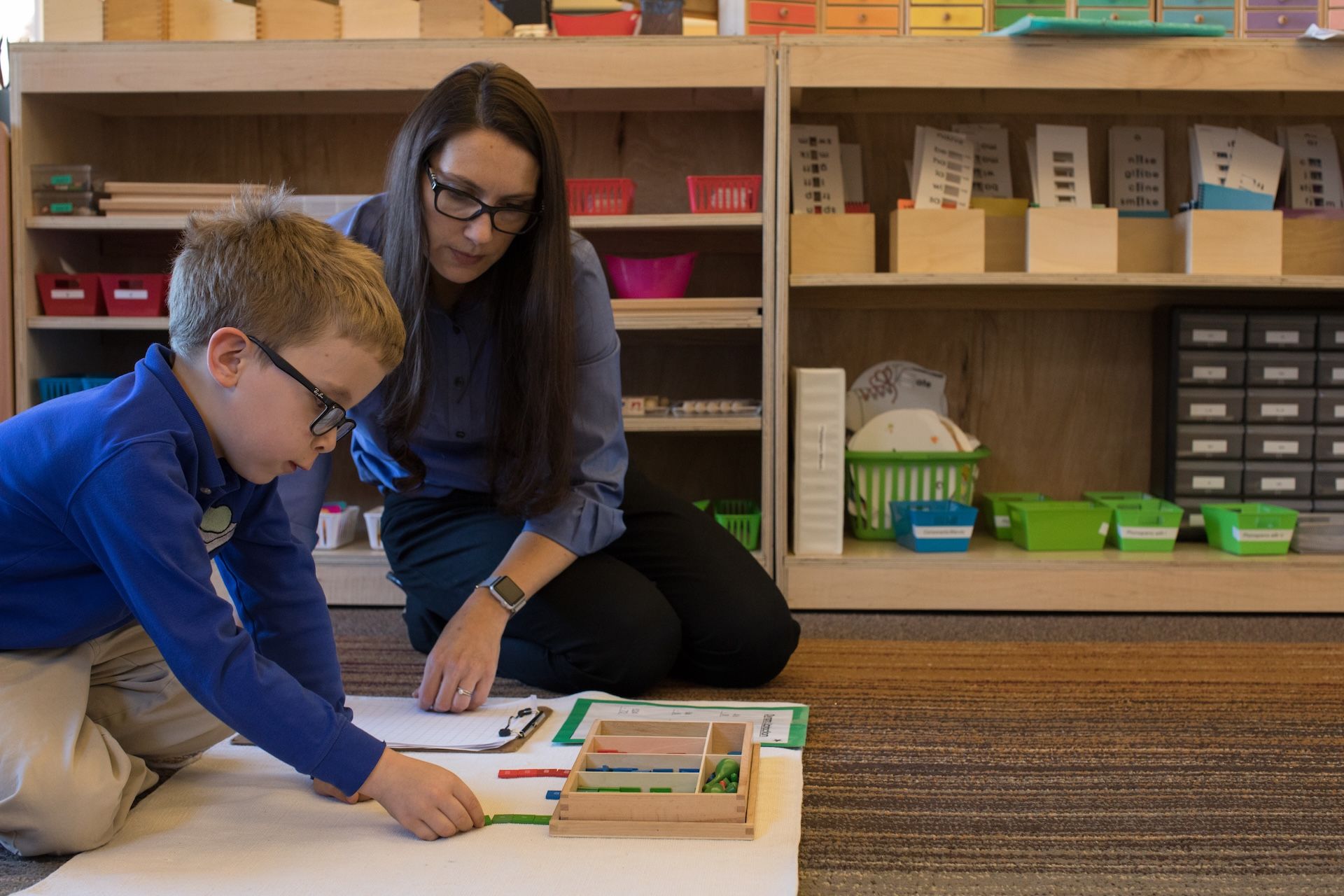
Montessori education is structured around supporting these stages and tendencies. Instead of imposing learning, we respect and reinforce the natural unfolding of each child’s abilities. Montessori learning environments are carefully prepared to meet developmental needs, and the adult’s role shifts from teacher to someone who serves as an aide to life. This means adults serve as guides who observe, prepare, and support rather than direct.
A Cosmic Perspective
Montessori’s vision of human development goes beyond the individual. She saw human beings as part of a cosmic web of interrelationships. In this interconnected system, each part plays a role in maintaining balance and harmony. Humans have a special place in this system, not only because of our capacity to adapt but because of our consciousness of that very role.
With this perspective, we recognize that education must also cultivate humility, wonder, and stewardship —qualities that enable us to live responsibly within this complex, interdependent world. In this context, education is not just about achieving success; it’s about supporting the growth of mature, adaptive, and aware human beings.
The Power of Adaptation
Humans are uniquely capable of adapting to a vast range of environments and social conditions. We have been able to move beyond survival and, in the process, have become creative, intelligent, and intentional in our adaptation. From birth, children adapt and evolve through interaction with their surroundings. Through their senses, hands, minds, and relationships, children construct themselves and their understanding of the world.
Dr. Montessori identified key characteristics that support this adaptation. Humans have a long childhood, noteworthy for the development of our hands, intelligence, imagination, and social interdependence. These capacities are guided by the Human Tendencies, which not only move development forward but also shape who we become.
The Human Tendencies
These universal tendencies include the drive to:
- Orient to the environment
- Explore the unknown
- Order and make sense of the world
- Abstract and think symbolically
- Imagine possibilities
- Calculate and reason
- Work to shape and adapt the environment
- Repeat and strive for precision
- Perfect oneself through effort
- Communicate and associate with others
These tendencies are innate, universal, lifelong, and evolutionary in nature. They cannot be eliminated, but they can be supported—or thwarted. When blocked, children will still try to meet their needs, often in less productive or more disruptive ways.
Observation and the Role of Adults
To truly support a child’s development, we observe with care to determine if children’s tendencies are being honored or obstructed. As Montessori-trained guides, we strive to look beneath behavior and recognize what drives it. This observational practice shifts our understanding of children and deepens our respect for their developmental process.
Dr. Montessori’s work challenges traditional views of education. Instead of seeing adults as the agents of growth, Dr. Montessori emphasized that children are self-constructing beings. Education should not be about imposing knowledge but about intentionally supporting the natural process of development.
Education as an Aid to Life
Ultimately, we believe that education should serve as a vital component of life itself. When we align learning environments with the science of human development, supporting children’s creative process of adaptation, we open the door to profound potential.
Montessori education offers not only a method but a visionary framework rooted in observation, science, and deep reverence for what it means to be human. It calls us to see children not as empty vessels, but as beings full of possibility, ready to become mature, capable, and compassionate citizens of the world.
We invite you to visit our school to see how Montessori environments support the potential of our young people!