Practical Life: From Hand Washing to Entrepreneurship

Practical life is one of Montessori education's core components, and it’s one of the vital elements that make it stand out from other models. The work comes in a variety of forms, too. Guides give direct lessons, children are afforded time and space to practice, and much of the learning is built authentically into the daily routine.
What practical life looks like throughout the different stages of childhood is where things get interesting. Read on to learn a bit about the skills we teach at various ages and how you might implement the practice at home with your own child.
Toddler environments
- Food tasting - In lieu of a traditional snack time, many toddler classrooms include tasting opportunities. This includes a formal sit down with all the children at a table and incorporates teaching children how to pass serving dishes or serve one another. The fun and routine of regular food tasting allows toddlers to try a variety of foods and flavors that they may not have otherwise.
- Table setting - To prepare for food tasting, children take turns helping to set the table. This is a skill that toddlers are fully capable of (with a bit of guidance) and allows them to contribute to the group while building a sense of confidence.
- Window washing - The funny thing about young children is they love to clean. For adults, a task like washing windows is just one more tedious item to check off the list; for kids it’s an exciting new adventure that makes them feel grown-up. Toddler guides provide children with the necessary tools, they give a brief lesson, and allow the children to practice.
- Sweeping - As you might imagine, there are plenty of spills in any classroom! One of the first ways many Montessori guides teach children to sweep is to tape off a small square on the floor. Children are meant to sweep debris into the square to make it easier to then collect with a dustpan and brush. This is something you can try at home, too.
- Folding napkins - Folding laundry may seem like an endless task, but when your toddlers want to help, let them! Small, square items, like napkins, washcloths, and dish towels, are perfect for small hands to practice with. Demonstrate wordlessly with one or two, then give them a pile to work on. You will be amazed at their intense focus and ability.
- Hand washing - There are specific Montessori lessons to teach a child to wash their hands. This is an especially important skill for them to master now, and parents can easily demonstrate and guide children through the steps at home as well.
- Pouring activities - The opportunities for pouring are endless. Montessori environments may provide children with small trays complete with prepared pouring activities. This may include a small pitcher and a bowl that water can be transferred between.
- Plant care - With guidance, toddlers may begin to learn about basic plant care, such as watering.
- Basic organization - We believe it’s important to teach children organization right from the start, and since children in the first plane of development have a finely tuned sense of order, this makes for great timing to learn this skill. When a child arrives in the morning, they are responsible for putting their shoes in their shoe cubby. If a child takes a work off a shelf, we teach them how to return it to its proper spot.
- Putting on and taking off one’s coat and shoes - Basic self care is important, and another great opportunity to nurture independence. It may take some time and practice, but toddler guides teach and encourage children to put on and take off their own shoes and coats. Want to try this at home? Check out this great video of the “ Montessori coat flip.”

Primary (Casa) environments
- Controlled walking - Refinement of gross motor skills is one important area primary children work on throughout the course of their three-year cycle. Montessori guides may tape a circle onto the floor for children to walk on. As a challenging extension, students may hold a bell while walking, with the goal of not allowing it to ring.
- Carrying items - It’s important to teach children how to carry items properly, whether that be a tray of work, a glass of water, or even a chair safely across the room.
- Transfer work - Small trays of transfer work can be found on the shelves of any primary classroom. Children work on their fine motor skills by moving small objects (pom poms, beads, stones) from one bowl or container to another using various tools (tongs, spoons, etc.).
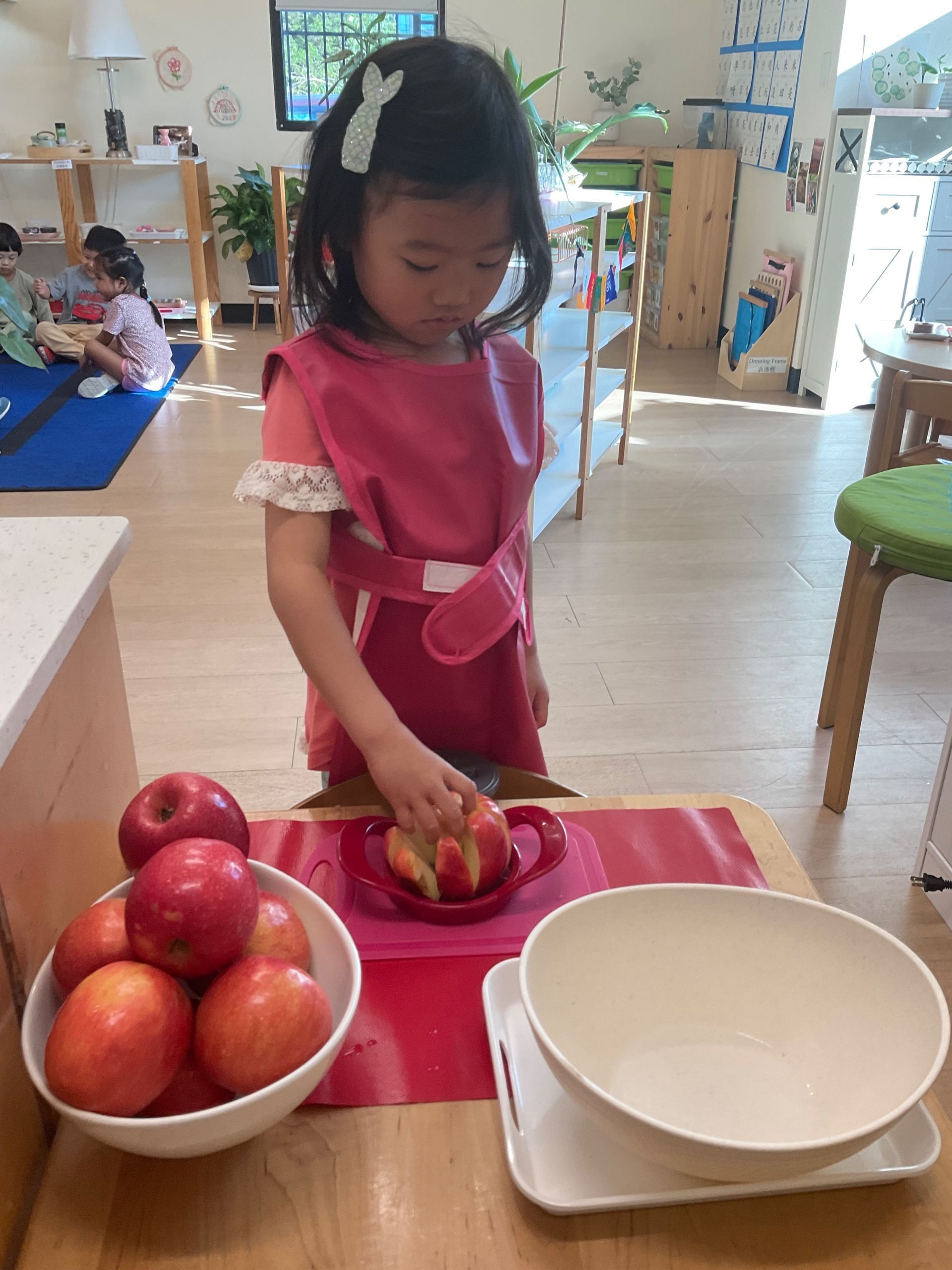
- Using tools - From kitchen tools like whisks and apple slicers, to handy tools like screwdrivers and hammers, primary-aged children have the opportunity to try out and master a wide variety.
- Pouring activities - Much like in the toddler environment, primary children work with pouring activities. Rice is often used, as well as water, and cleaning up spills is a part of the work.
- Rolling mats - Montessori children use work mats to define their space (both for themselves and their classmates). Learning how to properly roll and store these mats makes them neat and available to the next child.
- Plant care - A continuation of the toddler work, children in the primary classroom learn how to water plants, as well as dust their leaves and ensure proper sunlight. They may even have opportunities to garden with their class.
- Cleaning the classroom environment - Children aged 3-6 are still primed with a sense of order, and they delight in assisting in cleaning the classroom environment. Using real mops, brooms, and sponges, they are given lessons and ample time to practice.
- Handwashing - Again, a continuation of the work in the toddler classroom, primary students are taught how to carefully and effectively wash their hands.
- Dressing frames - These lovely Montessori materials consist of a wooden frame with fabric and various types of fasteners. One frame teaches children to button, while another allows for practice zippering, using hooks and eyes, buckling, lacing, tying, and more.
- Food preparation - There are so many skills to be taught in the kitchen (and classroom!). Children typically start with cutting and slicing, then move on to spreading, stirring and mixing, peeling, juicing, and preparing basic multi-step snacks.
- Grace and courtesy - We believe that caring for one another is a big part of our basic practical life skillset. We teach our students how to greet one another, how to have appropriate conversations, and how to welcome a guest into the classroom.
Elementary environments
- Food preparation - Food prep is often seen as a staple of the primary environment, but it should (and does) continue well beyond. Different schools and teachers approach this work differently, however, and it can take on so many forms. Some classes make a treat for each child’s birthday, while others prepare meals for special occasions, or even weekly.
- Meal preparation - Beyond the act of chopping and cooking, many Montessori elementary students are able to experience the work that comes beforehand, including recipe selection and shopping for ingredients within a budget.
- Cleaning the classroom environment - The glorious sense of order that graces the first plane quickly dissolves when children enter their elementary years. This means there are plenty of messes to clean up, and lots of opportunities to teach children how to do so. Working clean-up time into the regular routine is one way we foster a sense of responsibility in our students.
- Plant and animal care - Elementary children continue to assist with plant care as they did in the primary years, yet this is often extended to assisting the guides with caring for any class pets. This is often done on a rotating basis, as most children are enamored with animals and jobs that involve their care are quite coveted!
- Handwork - It is during the elementary years that children discover the calming nature of handwork. What often begins with simple finger knitting can take on a wide variety of forms. Children in a Montessori class can often be seen engaging in these types of activities during read alouds, when they complete their work, or when they need a moment to calm and/or center themselves.
- Community service - During the second plane of development children are able to see the world beyond themselves. They begin to contemplate society and their role within it, while also harboring a deep sense of justice and fairness. This makes it the perfect time to introduce service learning. Service projects are best formulated by allowing the students to drive the mission with adults serving as guides who help out with logistics.
- Grace and courtesy - As children age, grace and courtesy becomes more about how to interact with others on a deeper level. School-aged children have a strong desire to socialize, but they still have a lot to learn about how to do so with grace. We can help - by teaching skills like conflict resolution, and by reading stories about children who encounter typical social situations, priming them for discussions that create solutions.
- Going out - Elementary children are ready to engage with the larger community. By allowing them to plan trips that are related to their studies or areas of interests, a whole host of skills can be taught, including phone etiquette, taking public transportation, and how to behave in different settings and speak with different people. Beyond the scope of the traditional ‘field trip’, going out involves the development of critical life skills.
Adolescent environments
- Business management - The Montessori adolescent environment is centered on the students working together to run a business. Their multiple years in the community mean they have opportunities to try out a wide variety of roles, too. While the traditional business is a working farm, many Montessori schools have adapted the concept to meet their own local needs.
- Financial responsibility - Running a business includes making purchasing decisions, setting cost prices, and creating enough revenue to stay afloat. Montessori adolescents are able to have valuable practice making financial decisions before they ever leave for college.
- Independent interactions with community members - Teens are social creatures, and Montessori programs allow them to develop connections with their larger community. Their work includes reaching out to and planning with other adults and businesses in the local community, giving them experience that will help them succeed in the future and be contributing members of their communities.
- Meal planning, preparation, and food service - Whether this work is a part of their business or simply regular preparation of meals for one another, middle- and high-school Montessori students are able to have hands-on experience creating and serving meals to others. This will prepare them to learn healthy eating habits and nurture an appreciation for culinary arts.
- Agricultural skills - Whether a Montessori adolescent program runs a full farm or a CSA for micro-greens, their work incorporates botany and an understanding of local agriculture. At the very least, this gives them an understanding and new connection to their larger food system.
Please note that the skills we have listed for each age group are far from exhaustive. These are just a few of the highlights! We hope you have found this article informative, and maybe even inspiring.
Warm regards,Candice Lin, Director
info@jordanmontessori.com