Silver Linings: Moments of Joy Amidst the Challenges

Montessori Thrive • January 15, 2021

Growing up during a global pandemic is a challenge. For that matter, so is parenting and educating children during this time. How can we create an atmosphere of normal when our world is anything but?

Somehow, even with remote learning, safety precautions, separation from friends and family, and so much more, there are still glimmers of good. A global threat has somehow managed to connect us all while making our little worlds a bit smaller and a bit more cozy. We have been forced to slow down. Our perspectives have adjusted. And although we are still facing critical challenges, we can all agree that the moments of joy in between have been even sweeter.

After hearing from parents and teachers, we decided to share some of their words and the silver linings they have been experiencing. We would love to hear from you; please join the conversation and let us know how your family has found moments of joy throughout the past year.


Spending more time together as a family

Early last year it felt like the world came to a grinding halt. Like it or not, many of us suddenly found ourselves at home a whole lot more than we were used to. Schools turned to remote learning and offices had employees working from home. We all became well-versed in navigating zoom calls, simultaneously juggling parenting and working, finding a bit of grace when we couldn’t balance it all, and, perhaps unsurprisingly, we began to delight in the extra time together as a family.

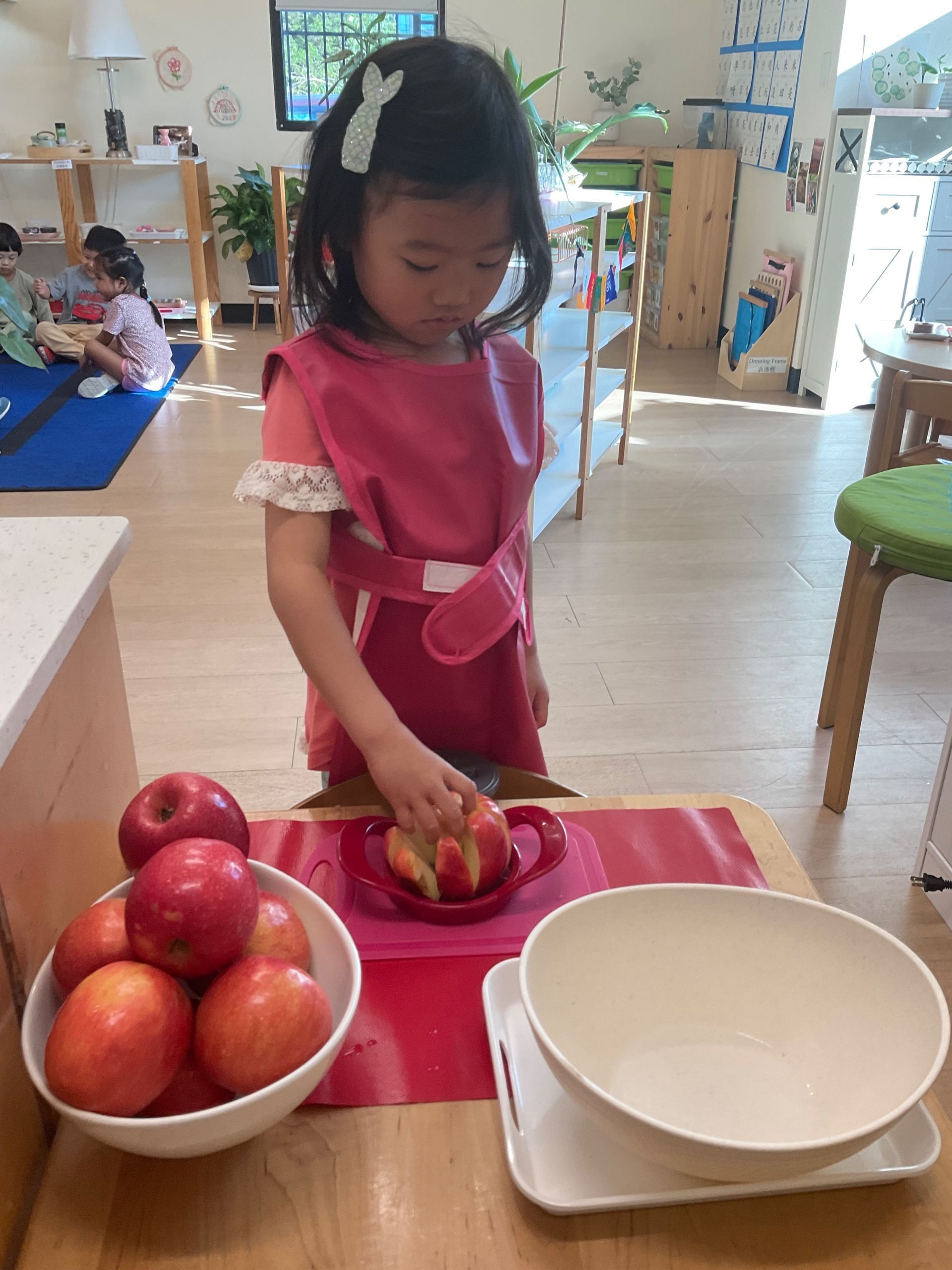
Without commutes and social obligations, we have found ourselves gathering around the coffee table for board games. Family movie nights have been a regular occurrence, and who among us hasn’t stepped up their cooking and/or baking game?

Even as our schedules have slowly inched their way back toward some semblance of normality, the extra family time has remained a newly treasured value for many of us.

“Without after-school activities or weekend events, we have been more involved with each other and spending quality time together. Things that we may have done once a week and squeezed into busy schedules have become routine. Cooking as a family, game nights, Jenga before school, even raking leaves becomes a family project and a chance to be silly together. We have pulled in and around each other, becoming even better friends and companions as we realize how important it is to protect ourselves and our community. We have also come to treasure the family moments that we have with grandparents and cousins instead of taking their presence for granted as we did before.”

We have begun to more fully recognize the preciousness of our time together. We cannot control what happens in the larger world around us, but we can focus inward and relish in the beauty of spending more time with our children.

“I feel guilty saying this, with all of the loss and hardship that so much of the world has experienced due to the pandemic, but these days have been a truly wonderful time for us. We've never cared much for routines and schedules. What feels like uncertainty, boredom, and loss of structure to some, feels like a gift to us. A gift of freedom to chase whatever butterflies emerge from our imaginations. And, with fewer places to be, fewer people to meet, a gift of time to chase our butterflies as far as we want. We often wake up with ideas of things we want to create.”


The admirable resilience of our children

“In a world where grown-ups complain and refuse to do the right thing, I watched our child and others easily adapt to wearing masks and taking safety precautions. I try to see the world through her eyes and enjoy the simplicity of doing the right thing without complaint or issue.”

While we are not in any way diminishing the challenges our children have faced, it has been pretty amazing to watch how well they have coped overall. Some folks have been taken aback by just how well their kids have adjusted. Many of our children have stepped up and shown a level of independence and maturity that surprises us. Other parents have admired the ease in which they have adapted to regulations designed for keeping us all safe.

“The growth that came with adjusting to remote learning. I’ve watched my 8-year-old behave like a college student - figuring out and tracking assignments, joining zoom meetings and taking on time management in a way many adults aren’t able to. I’m so proud of her! The independence fostered through Montessori methods has really shone brightly during this dark time.”


Celebrating the silliness

For teachers, the children continue to be a source of inspiration and this sometimes shines through in delightfully unexpected ways. One Montessori guide shared how new disinfecting guidelines led one of her primary students to encourage her in the cutest way possible.

“We are cleaning, now more than ever before, in the classroom. The day is broken by random spurts of spraying and cleaning and hand washing and cleaning and cleaning and cleaning! One day the youngest member of our class watched me spraying down a desk and said, “You are doing a great job!” His innocent comment made me laugh and calmed me in my rush of cleaning.”

Getting Creative

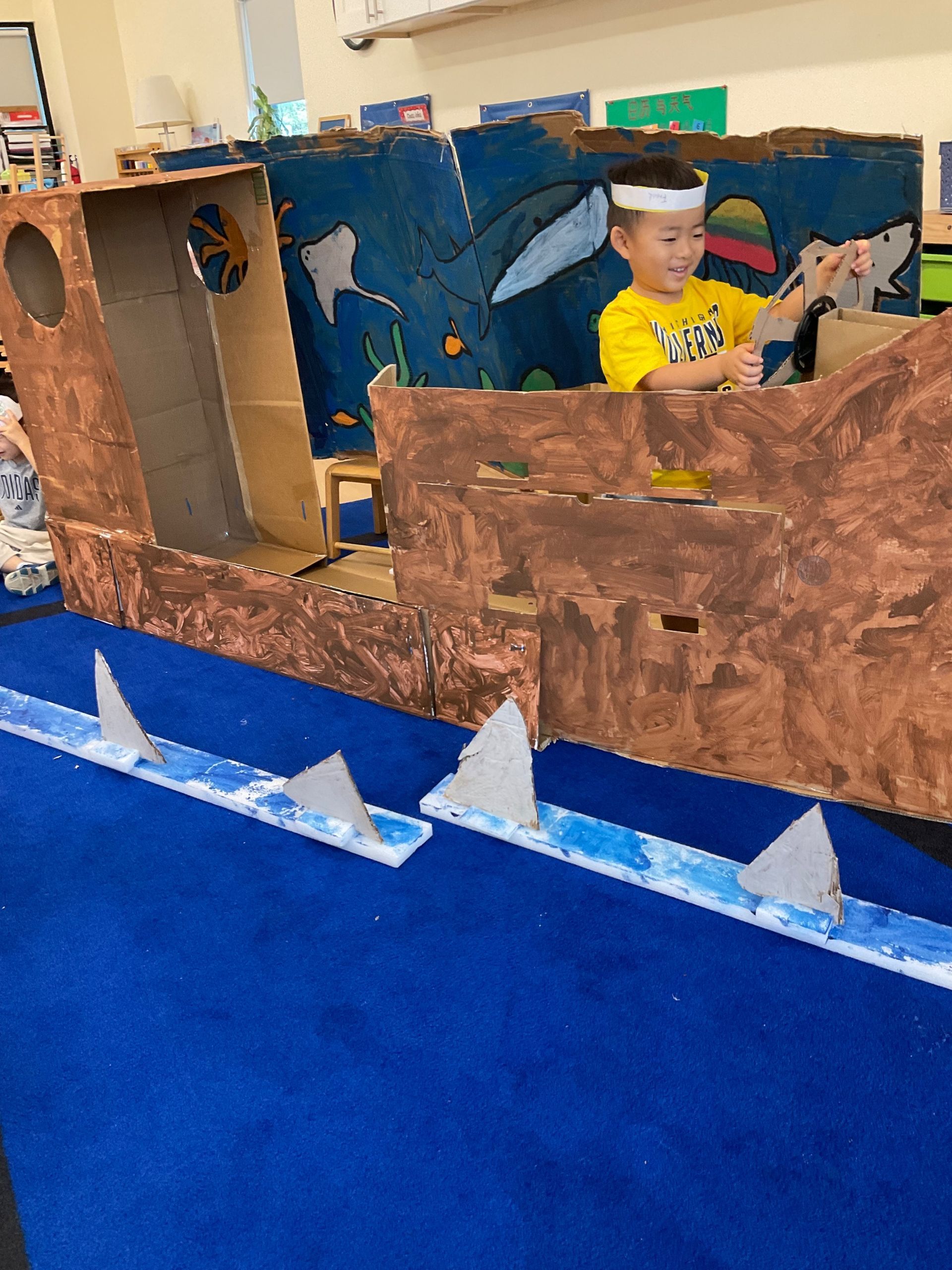
For so many of us, more time at home has meant more time for creativity. As we mentioned earlier in the article, many families have taken to the kitchen. Some have created makeshift art studios. Some have created elaborate blanket forts or marble runs made out of toilet paper tubes taped to hallway walls.

Montessori often spoke about the need to give our children long periods of uninterrupted time so that they may delve deeply into areas of interest. While this is the basis for Montessori work periods, it has also found an unexpected application in our forced time at home. Our kids are showing us interests, talents, and skills that we may have never even known they had. It is amazing to watch their deep focus, and their joy in what they create.

“These days, we can make spy cases for all occasions (we now have the lady's handbag, art case, and toolbox models), with hidden compartments, handmade spy tools, and secret agent case files; fully engineered and illustrated card games and board games (that are actually fun to play!); and a hand-bound, hand-drawn nutshell library of original stories (a work in progress). One morning, I had an "epiphany," as Paloma likes to call it. I said to her, "I have an idea. It's just a small one." And with a knowing (and complicit) smile, she replied, "You don't have small ideas." She doesn't either. And the time we've been given means that we don't have to make our ideas smaller.”


None of us know exactly when this pandemic will end. We still face so many serious challenges of many types, and we must work hard to support and protect one another. But let us take just a bit of time to notice the good, for there is much of that as well.


Warm regards,

Candice Lin, Director

info@jordanmontessori.com


By LakeCreek Montessori School April 1, 2026
When children struggle, Montessori asks: what's in the way? Explore how the prepared environment helps children find their way back to themselves.
April 1, 2026
Discover why Montessori teaches cursive first — and how neuroscience is confirming what Dr. Montessori observed about children's hands and brains.
By LakeCreek Montessori School April 1, 2026
More Than a Chart on the Wall: How Montessori Timelines Build History, Imagination, and Character
By LakeCreek Montessori School April 1, 2026
Discover how Montessori education nurtures children's deepest human needs — from exploration and meaningful work to belonging and spiritual growth.
By LakeCreek Montessori School March 6, 2026
Discover how peer learning, meaningful context, adult interaction, and order align Montessori with the science of how children learn best.
By LakeCreek Montessori School March 6, 2026
Montessori education has been in existence for over a century, but does it actually work? Dr. Angeline Stoll Lillard spent years researching this question, and her book, Montessori: The Science Behind the Genius, is a must-read. In her book, Dr. Lillard identifies eight principles at the heart of Montessori education. What’s key is that these Montessori principles align with what developmental science tells us about how humans actually learn. The remarkable thing is that Dr. Maria Montessori arrived at most of these insights through careful observation of children, decades before the research existed to corroborate how children learn. In this two-part blog post, we’ll examine these eight principles and the connected research. PRINCIPLE ONE: Movement and Learning Are Deeply Entwined In most traditional classrooms, children are still expected to sit still, as if stillness is a prerequisite for learning. In Montessori, we understand how movement and thinking are intertwined. And research backs this up. Studies have found that physical activity improves cognition, judgment, memory, and social reasoning. Moving the body isn't a break from learning. Rather, the movement is often the learning (and this is even more so for younger children!). Montessori materials are designed to be touched, carried, sorted, and manipulated. Children working with the knobbed cylinder blocks are actively perceiving, making judgments, and reasoning through their hands. The same is true when children sort fabric squares by texture, shake and compare sound cylinders, or lay out bead bars to represent quantities. Every material helps children integrate their minds and bodies. Practical life activities take this even further. When children learn to pour, button, fold, or prepare food, they are engaging in organized sequences of purposeful action that develop concentration and executive function skills. What the Research Shows A Milwaukee study found that high school students who had previously attended Montessori programs significantly outperformed peers on math and science assessments, subjects that rely heavily on the kind of reasoning that, in Montessori, is first built through hands-on materials. PRINCIPLE TWO: Choice Improves Both Learning and Well-Being The freedom to choose is at the heart of Montessori education, but this isn’t just about enjoyment. Having choice measurably affects how well children learn and how they feel about themselves. In a striking series of studies, children aged seven to nine were given anagram puzzles to solve. Those who chose their own category of puzzle solved twice as many as children whose category had been chosen for them, even though the actual puzzles were identical. Those who had a choice also spent far more time voluntarily working on puzzles during free time. The key finding is that the perception of control (even in small things) activates a fundamentally different relationship to the work. Children who feel in control tend to engage more deeply, persist longer, and take more ownership of their learning. In a Montessori classroom, children choose their own work throughout the day. Importantly, Dr. Lillard notes that this freedom is always paired with responsibility, and that too many choices can be as demotivating as none. The Montessori environment offers meaningful, bounded choice. Rather than an overwhelming array, each classroom has a selection of purposeful materials designed to match children’s developmental readiness. Choice and concentration are closely connected, too. When children choose work that genuinely engages them, they're far more likely to reach a deep state of focus, or what psychologists call a “flow state.” PRINCIPLE THREE: Children Learn Best When They're Genuinely Interested This sounds obvious, of course! It makes sense that we learn better when we are interested. However, think about this in terms of how classrooms are typically structured. If interest is one of the most powerful drivers of learning, then organizing a school day around a single curriculum delivered to the whole class at once works against almost every child in the room. Dr. Montessori understood children's interests as biological signals pointing toward what their developing minds most need to engage with at that moment in their lives. These windows of opportunity, or "sensitive periods,” are particular stretches of development during which children are uniquely primed to absorb certain kinds of learning. During these windows, learning that matches the child's inner readiness can be extraordinarily effortless and lasting. The role of interest is why Montessori materials are designed to be beautiful, engaging, and self-correcting. The sensorial materials, for example, aren't only teaching discrimination of size or color. They are designed to help children become more interested in noticing the world around them. The adult’s role is to observe carefully and offer new lessons at the moment a child's interest is most alive. PRINCIPLE FOUR: Rewards Undermine the Motivation They're Meant to Build Offering children external rewards (e.g., stickers, prizes, praise for being smart) for activities they already enjoy reliably reduces their intrinsic motivation to do those things later. What the Research Shows Researchers identified preschoolers who loved drawing with markers. They then told one group they would receive a "Good Player Award" for drawing (a fancy certificate with a gold star). Weeks later, the children who had expected the reward used the markers far less than they had before, and half as much as children who had never been offered a reward at all. Expecting a reward had turned something they loved into something they did for a prize. And when the prize was gone, so was much of the pleasure. Rewards like sticker charts, gold stars, and even grades and honor rolls, shift children’s relationship to learning from "I do this because it interests me" to "I do this to get the reward." When the reward is taken away, children’s inner drive has often already weakened. In Montessori classrooms, feedback comes through the work itself, which includes many self-correcting materials, so children discover their own errors without external judgment. The goal is to keep children's relationship to learning intrinsic, personal, and durable. This doesn't mean feedback is absent, though! What matters is the kind of feedback. Research by psychologist Carol Dweck found that praising children for effort (e.g., "you worked really hard on that”) produces dramatically better outcomes than praising ability (e.g., “you’re so smart”). Children praised for effort choose harder challenges, persist longer after failure, and actually improve their performance over time. Children praised for their intelligence begin avoiding challenges, fearing that failure will expose them as not as smart as they were told they were. In our following blog post, we’ll look at the next four Montessori principles outlined in Dr. Angeline Stoll Lillard’s book, Montessori: The Science Behind the Genius: Children Learn Powerfully from Each Other Meaningful Context Makes Learning Richer and More Lasting How Adults Interact with Children Shapes Everything Order in the Environment Supports Order in the Mind In the meantime, schedule a tour here in North Austin to see the principles in action! And let us know if you would like to borrow a copy of Montessori: The Science Behind the Genius by Dr. Angeline Stoll Lillard. It is one of the most research-based books on Montessori education, and we recommend it to anyone who wants to understand the deeper logic of Montessori!
By LakeCreek Montessori School March 6, 2026
When we lose our cool, repair matters most. Explore accountability, curiosity, and connection to break reactive cycles and parent with intention.
By LakeCreek Montessori School March 6, 2026
Explore the Montessori three-period lesson and how its quiet simplicity unites words and meaning during a child’s sensitive period for language.
By LakeCreek Montessori School February 13, 2026
Explore a curated list of children’s books about water, rivers, and watersheds. These stories invite curiosity, care for the planet, and meaningful reading at home.
By LakeCreek Montessori School February 12, 2026
Montessori children experience long division in a concrete and meaningful way. This post shares how hands-on materials help children understand place value and build confidence with complex math.
Show More