The Most Important Montessori Practice You Rarely Hear About
Discover how child-guide conferences strengthen relationships, support reflection, and help Montessori children take ownership of their learning.
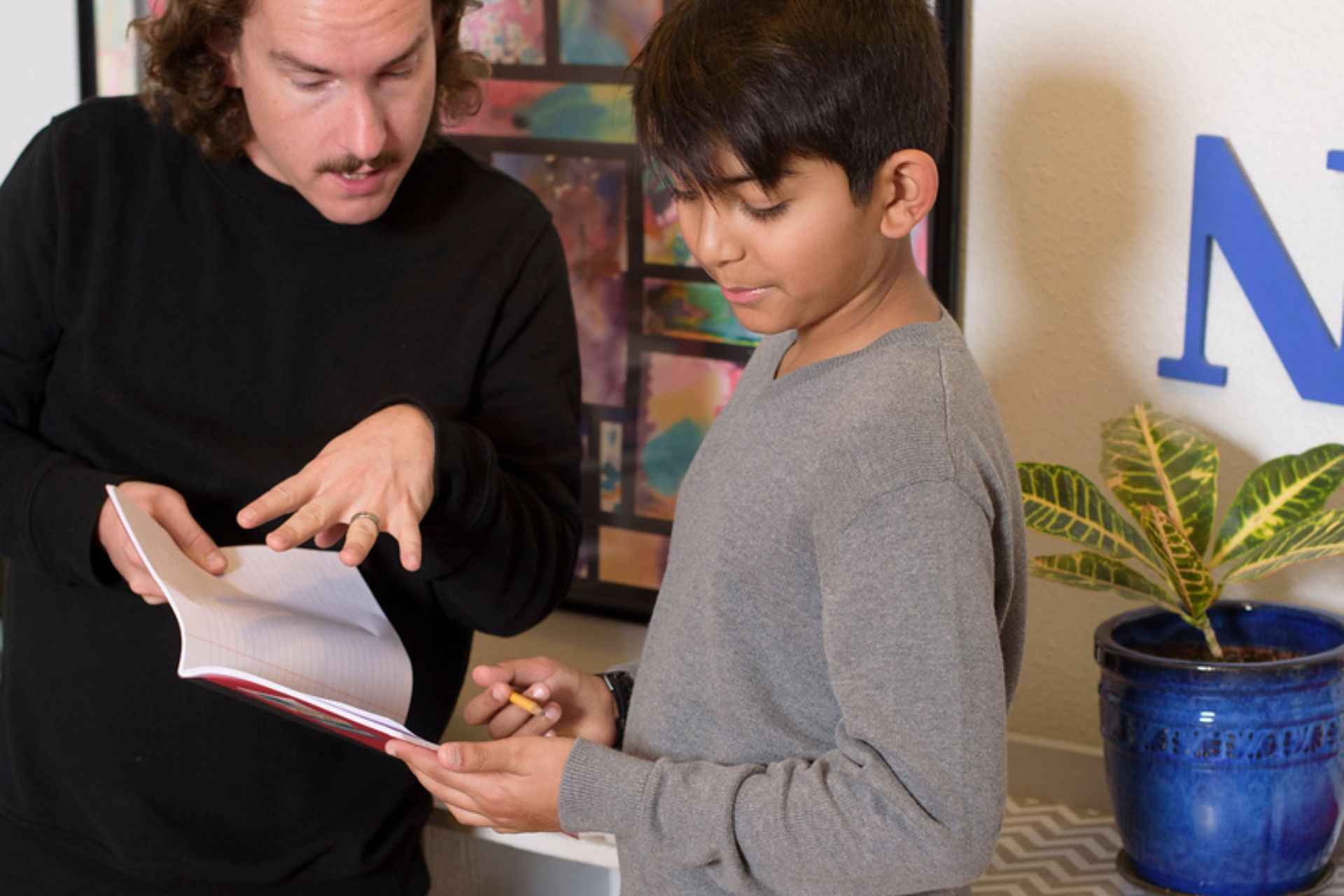
One of the quieter, less visible practices in a Montessori elementary classroom is the Child-Guide conference. You may never see it listed on a schedule or mentioned in a weekly update, yet it plays a profound role in children’s experience at school.
Relationship Comes First
The primary purpose of these conferences is to establish, maintain, and strengthen the relationship between the adult and each child. This focus shifts the dynamic from a teacher looking for faults or scolding about unfinished work. Rather, it’s a collegial conversation that enables children to take an active and engaged role in their own education.
These connective conversations are grounded in relationship-building because when children feel emotionally safe and genuinely respected, they are far more willing to reflect, stretch themselves, and take responsibility for their growth.
Every Child, as Often as They Need
Montessori Guides aim to meet regularly with every child, but what “regularly” looks like can vary based on individual needs. Some children benefit from a longer, more formal conference every few weeks. Others need brief, frequent check-ins, sometimes lasting only a minute or two. These short moments might look like a quick conversation at the beginning of the morning, a gentle pause beside a table, or a quiet walk across the room together. The length of the meeting is not what matters. What is important is the message it sends: “I see you. I know your work. I care about how this is going for you.”
What Happens in a Child-Guide Conference?
While conferences vary based on each individual and the moment, they often include:
- The child bringing their learning journal or work (finished and unfinished)
- The guide bringing observational records
- A shared look at what has been accomplished
- Gentle reflection on what still feels unfinished
- Planning for what might come next
- Scheduling new lessons or presentations
- Support with larger projects: breaking them into steps, mapping timelines, imagining the finished product
This collaborative time also provides an opportunity to experiment with new strategies (“Would you like to try creating a prioritized list?”), celebrate successes (“You worked so hard on your presentation! How did it feel to share your work?”), and reflect upon challenges (“It seems like you’ve been feeling a bit stuck in your research project. Tell me more about what is going on.”).
Learning to Define “Finished”
One of the most freeing lessons children learn in Montessori is that not every piece of work must be finished to an adult’s standard. Sometimes children accomplish exactly what they set out to do, and continuing would add nothing meaningful. Other times, interest has naturally ended, and letting go is healthy.
This is not about lowering expectations. It is about honoring children’s internal sense of completion and learning when to release what no longer serves a purpose.
Trusting Children’s Self-Assessment
A cornerstone of these conferences is trust. Guides listen carefully to how children assess their own work and articulate their goals. When an adult truly accepts children’s self-assessment, something powerful happens: children begin to see themselves as capable, thoughtful, and worthy of being taken seriously. Children often receive more from the tone and sentiment of these meetings than from the actual content discussed.
The Whole Child Matters
Because Montessori education is concerned with the whole child, conferences may naturally move beyond academics. A Guide might gently offer support with social dynamics or ask about recent struggles during outdoor time. These moments provide a safe space for children to reflect on their own social, emotional, and physical development, and to recognize that there is a network of support.
When Relationships Need Repair
Even in the most thoughtful classrooms, relationships can become strained. What matters is how adults respond. It is never too late for a Guide to sit with a child and say, honestly: “I’ve been thinking about how we’ve been interacting recently, and I’d love to brainstorm with you about what I could do differently.”
When an adult takes responsibility, without demanding the child do the same, something shifts. Trust begins to rebuild. Real dialogue becomes possible.
Children learn from this modeling. In time, after they feel safe, they often step forward to take responsibility themselves.
What Children Are Really Learning
Through these quiet, intentional meetings, children learn that:
- their thoughts and feelings matter,
- adults can be trusted,
- mistakes are part of growth,
- reflection leads to independence, and
- relationships can be repaired.
And while these conferences may happen quietly in a corner of the classroom, their impact echoes far beyond it. This is true preparation for life.
To learn more about the long-term benefits of Montessori, visit us here in Austin, Texas!