Math Books for Children of All Ages!

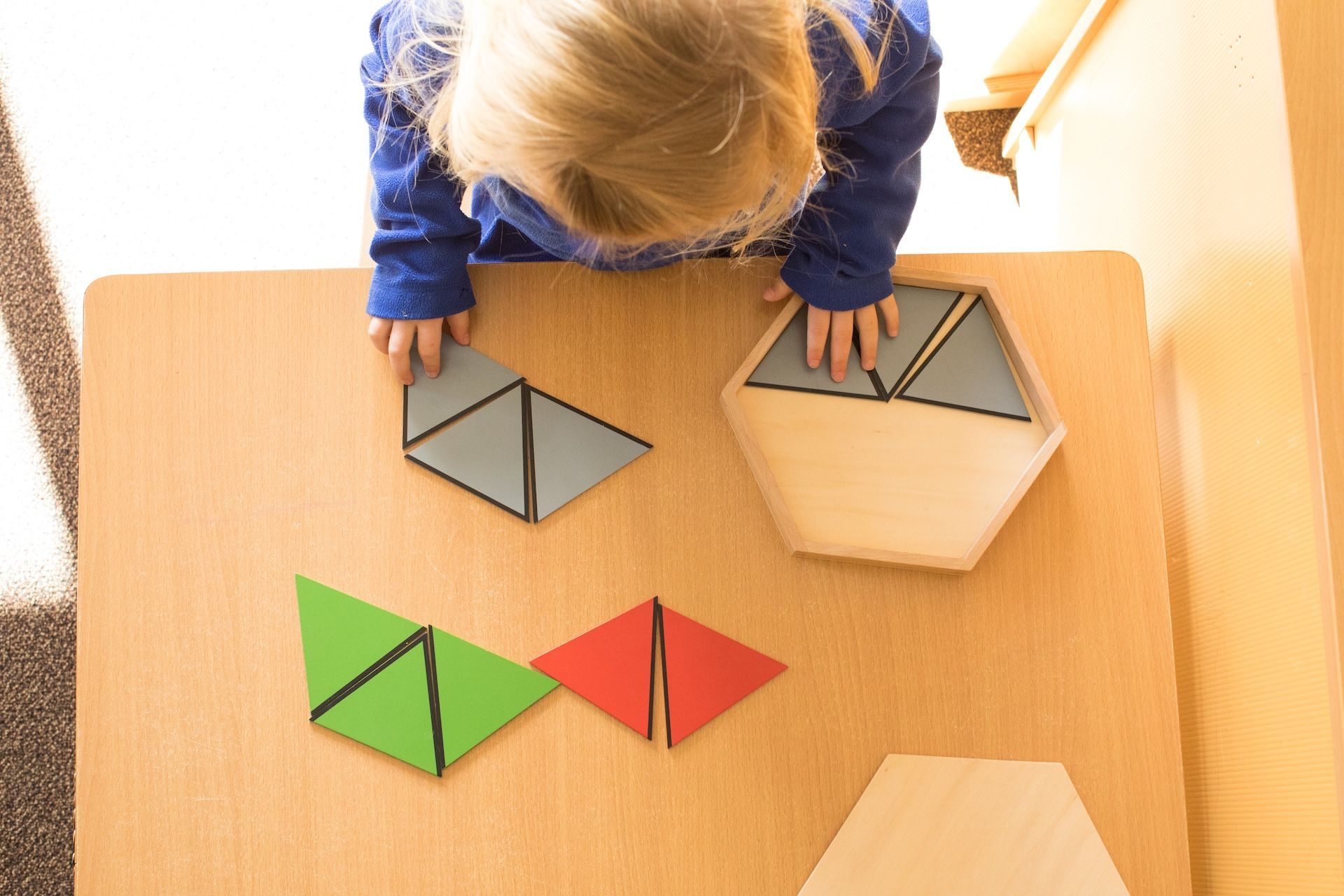
In Montessori schools, children tend to really love math. It’s no wonder, with gorgeous materials created to appeal to their senses and developmental stages. While work with the materials is best left in the classroom, one fun way parents can support their children’s love of math is by reading to them about it. This month we have created a list of books that will appeal to children of all ages, whether they are learning to count or discovering the magic of Pi. Check out these titles and let us know what you think!
by John J. Reiss
There are some iconic early counting books out there, but if you’re looking for something fresh to inspire a love of numbers, check out this beautiful little book. With bold illustrations and sturdy pages, children can learn to count to ten and beyond (there’s even a page for 1000!).
by David M. Schwartz, illustrated by Steven Kellogg
Is your child ready to expand their understanding of place value? Are you looking for a way to help them conceptualize larger numbers? This charming book is both fun and educational, giving kids concrete ways to visualize one million. How tall are a million children? How long does it take to count to a million? How much water would a million goldfish need? Find the answers to these questions and more!

by Greg Tang, illustrated by Harry Briggs
Adding, subtracting, multiplying, and dividing are important skills for all young children to learn. Finding different ways to look at groups of numbers can make operation work a breeze. The Grapes of Math uses clear illustrations and catchy rhymes to challenge children to find new ways to count larger numbers. Your child is sure to have fun figuring out these math riddles with you.
by Elinor J. Pinczes, illustrated by Bonnie MacKlain
Everyone loves a picnic, including ants! In an attempt to get to the food as soon as possible, the ants keep rearranging themselves into different groups. Two lines of 50 is surely faster than one line of 100, right? What about five lines of 20?
by Loreen Leedy
Lisa’s teacher asks the class to go home and measure something. What could be more fun than measuring your pet dog? This book discusses multiple standard units, nonstandard units, comparisons, and a myriad of ways to measure. Lisa and Penny have fun at the park, where there are plenty of other dogs to measure, too!
The Lion’s Share: A Tale of Halving Cake and Eating It, Too
by Matthew McElligott
An ant attends the Lion’s annual fancy dinner, along with a number of other animals. The sweet ant is shocked by the terrible behavior of the other guests. Beyond their awful table manners, they divide a cake with no regard for fairness (although they do give readers a great lesson about fractions along the way!). When the ant offers to bake the king a cake, the other animals try to outdo her, with each doubling the offer of cakes. Kids will be amazed and amused!
by Jon Sciezka, illustrated by Lane Smith
What would you do if your math teacher told you that basically everything in life could be a math problem? If you’re the main character in this book, you might feel like you have a math curse. When life is suddenly numbers, fractions, and word problems, how can you possibly think about anything else? When even the character’s dreams become math problems, they realize they have to find a solution.
Sir Cumference and the Dragon of Pi
by Cindy Neuschwander, illustrated by Wayne Geehan
When Sir Cumference has a stomach ache, his son Radius runs off to find some medicine. He accidentally turns his father into a dragon, and finds a mysterious mathematical poem to help him undo the magic. While searching for answers, Radius sees circles everywhere, but he needs to figure out how to measure circumference in order to save his dad. He does, of course, and what better way to celebrate than with some pie?
The Boy Who Loved Math: The Improbable Life of Paul Erdos
by Deborah Heiligman, illustrated by LeUyen Pham
Young Paul did not live his life like most people. He struggled with seemingly simple tasks, yet he was always thinking about math. As a four-year-old, he enjoyed mentally calculating how many seconds old people were. This story highlights the fact that there is a place in this world for all of us. The genius of this one boy was realized as he traveled the world collaborating with other mathematicians.
What’s Your Angle, Pythagoras?
by Julie Ellis, illustrated by Phyllis Hornung
While we don’t actually know anything about the childhood of the famed Pythagoras, Ellis imagines the types of mischief (and learning!) he may have gotten up to. Curiosity can lead us in many different directions, and Pythagoras goes on a voyage with his merchant father. His passion for buildings leads him to learn about angles, and how a knotted rope helped early builders calculate precise measurements. He explores some more, and uses patterned tiles to discover the concept of squaring.