Toilet Learning: The Montessori Way
As parents we quickly learn that children have control over three things: eating, sleeping, and toileting. Rather than engage in power struggles, however, we can help children develop the skills they need to manage and gain mastery over these essential aspects of life.
In Montessori learning communities, young children learn how to prepare snack, fall asleep without assistance, and dress themselves. In addition, they learn how to control their sphincter and stay dry. This process, which we call “toilet learning" or “toilet awareness” takes time, yet it is a vital part of becoming independent.
Because we are helping children with an important aspect of their independence, we try to avoid the terminology of “toilet training.” After all, we aren’t training our children like we might train a dog! Rather we are helping children feel the success of becoming fully independent as they become masters of their own body functions.
The process takes time but doesn’t have to feel daunting. Here are some key aspects of toileting the Montessori way.
EstablishBody Awareness
Toilet awareness starts at birth. From the earliest days of life, we talk to our infants about what is happening as we change their diapers. We might say, “Your diaper is wetfrom your urine,” or “I am wiping your poop off your bottom.”
To help our infants become aware of being wet or soiled, it’s best to use cloth diapers. Disposable diapers are very effective at wicking away moisture, which leads to children not connecting the act of eliminating pee with the feeling of being wet. As children shift into toddlerhood, they can begin to wear cloth underwear.
Useful phrases:
- “Does your diaper feel wet or dry? Is there poop in your diaper?”
- “Your underpants feel so heavy! You must have had a lot of pee come out.”
- “I see you are squatting down and pushing. Your poop is coming!”
Collaborate
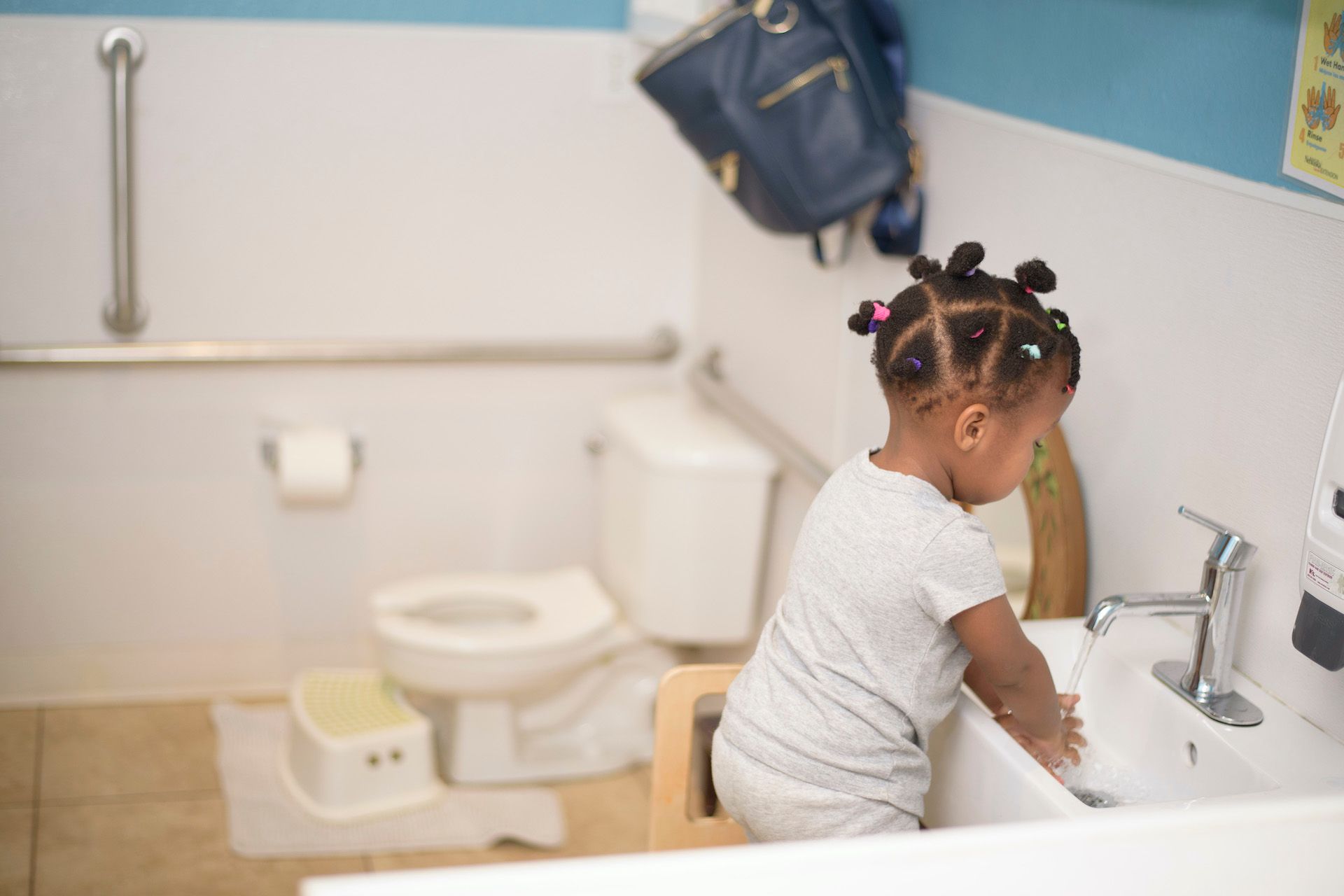
When a child is wet, we help them to the bathroom and collaborate with changing out of their wetunder wear. We allow them to sit on the toilet to see if any urine is left thatcan be pushed or released into the toilet. Then once they have on dry underwear, they return to their activity.
Children need to feel involved in the toileting and changing process. They can assist in getting the clean underwear or diaper and putting any soiled items in their appropriate place. This gives children the feeling of some power or control in what is happening.
Useful phrases:
- “You can hold your shirt up while I pull down your pants.”
- “You can open the Velcro on this side of your diaper and I’ll open the Velcro on that side.”
- “I’ll have a turn to wipe your bottom, and then you can have a turn!”
State the Facts
We are careful to stay matter of fact through the toileting process. Going to the toilet is a very natural thing to do, so we treat it as such. When children have wet or soiledtheir underpants or cloth diapers, we show them the dirty pair of underpants or diaper and where it should go. When appropriate we may even deposit feces from their underwear or diaper into the toilet. Children very quickly begin to associate and understand the process. Even when they begin to use the toilet successfully, we avoid clapping and celebrating and instead stick to the facts.
Useful phrases:
- “Everyone poops!”
- “Pee and poop go into the toilet.”
- “It’s time to try sitting on the toilet.”
- “Your underpants are wet. Let’s change into some dry underpants. Do you remember where to find your dry underpants in the bathroom?”
- “Look, there’s some pee on the floor. Please bring me the clean-up bucket from the bathroom so that we can dry the puddle.”
Keep it Light and Friendly
Children are very sensitive to adults’ emotions, even when we try not to show them! Thus we make sure to have a positive, light, and friendly attitude toward the toileting process. Our approach helps children feel comfortable with their normal bodily processes. So we make sure to avoid any facial expression, comment, or tone of voice that conveys disgust or dislike, frustration or impatience. We stay relaxed and positive, so children can feel that way too.
Useful phrases:
- “We can always change into dry clothes!”
- “Everyone used to wear diapers—even Mommy and Daddy! Now we can use the toilet. You can, too!”
No Tricks or Treats
We offer the toilet,but we never force children to sit on the toilet. We also avoid asking children if they would like to sit on the toilet. There is a happy middle in which we suggest that they sit on the toilet or let them know it is time to sit on the toilet. Ultimately, we trust that children will incorporate this part of daily life into their routine. Young children love the consistency of routines, so we ensure, from the very beginning, that toileting is a regular part of the day.
Bribing, reward charts, and punishments may have short-term results, but do not work for the long-term goal of helping children develop independence, self-assurance, and mastery of this essential part of their humanity. We allow children the time to be successful. Rather than scolding or over-congratulating, we know that children will learn through experience and feel proud of their accomplishments.
Useful phrases:
- “It’s time to sit on the toilet.”
- “You peed in the toilet. You did it all by yourself.”
Respect the Process
Often when adults change children it is all done so quickly that children aren’t even aware of their bodily functions. Rather than rushing, we take time to explain what is happening and offer opportunities for collaboration.
It’s showing the utmost respect to children when we help them learn how to do something for themselves. When children able to respond to their body’s needs, they are one step closer to being fully functioning, independent young people.