Our Montessori Bookshelf: For Summer Adventure
Summer should be a time of adventure! Remember back to your own childhood, when summer days seemed to stretch on endlessly? Now, our children are so scheduled that they rarely get to navigate the neighborhood, traverse through the forest, or splash along a stream bank. Yet more and more research shows the importance of unstructured time in nature.
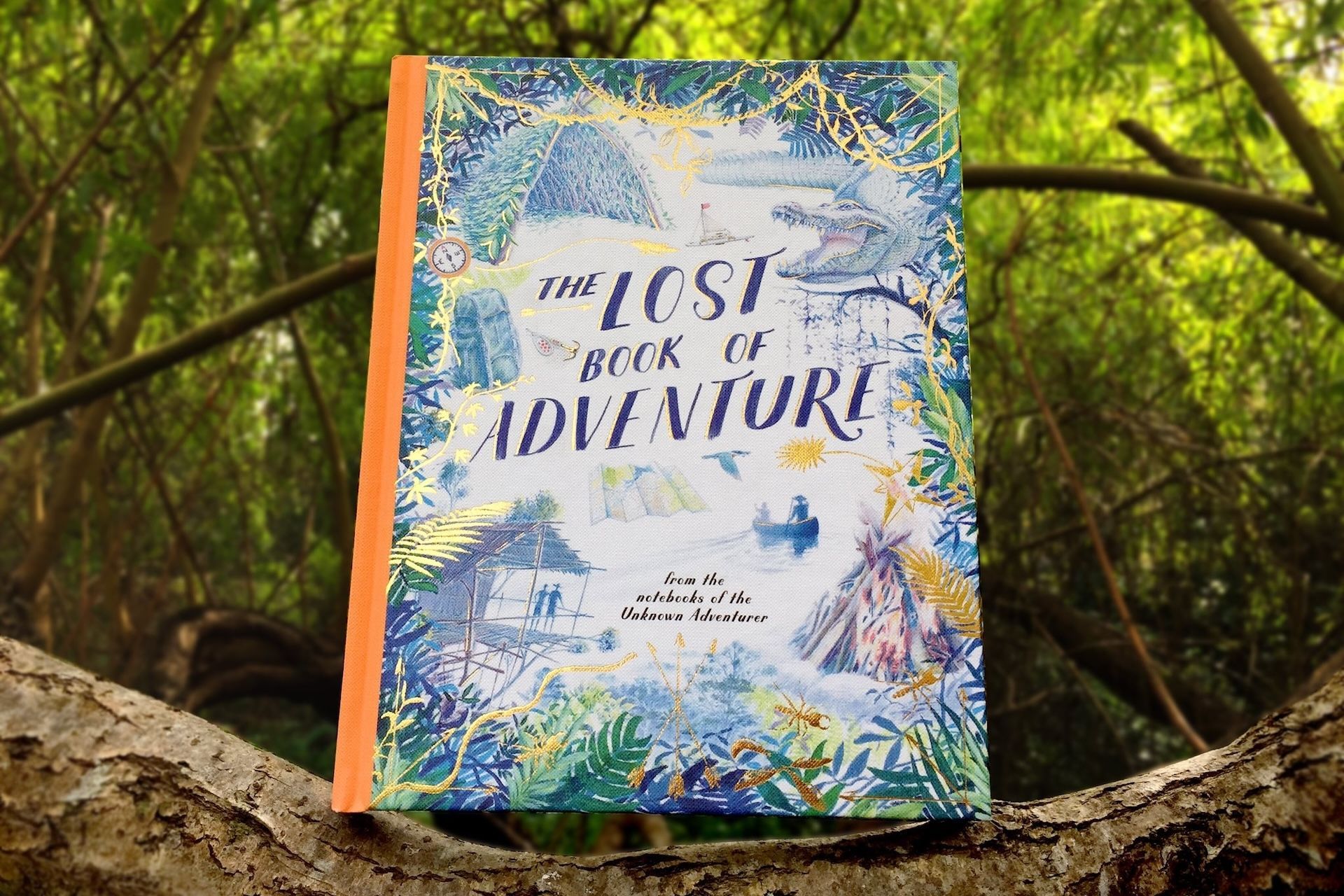
To encourage some summer outdoor adventure, we suggest settling in with your child to explore The Lost Book of Adventure from the notebooks of the Unknown Adventurer. Although this book is ideal for elementary ages and up, younger children can enjoy the illustrations and may even appreciate having adults read some of the snippets and sections scattered throughout the book.
To begin, it’s worth noting that by design this book has a sense of mystery and magic to it. While it’s chock full of practical advice and stories from the field, The Lost Book of Adventure’s origin story is an invitation all on its own.
The compiler and editor of the book, Teddy Keen, was on his own adventure in a remote part of the Amazon when he came upon an abandoned shelter. Upon some investigation, he and his friends uncovered a rusty metal container. Inside the container was a slew of notebooks, journals, and sketchbooks – a compilation of some unknown person’s adventures, wonder, and knowledge from all around the world. According to the story, there was also a letter addressed to two young family members with a reminder: “Be good, be adventurous, and look after your parents.”
After years of restoration, compiling, and editing, The Lost Book of Adventure not only shares this unknown explorer’s beautiful (digitally remastered) artwork but also offers practical tips and invitations to begin your own adventures in your backyard.
Although organized into thematic sections—camping, rafts and rafting, creating shelters, exploration, and general useful knowledge—the book is a kind of journey from cover to cover. It invites exploration of its pages. You want to discover the next illustration, caption, short narrative, or snippet of advice.
However, the book also serves as a kind of reference guide. How do you go to the bathroom in the woods? How can you make a bedsheet hammock? How do you climb a mountain? You can flip to just the content you need.
Woven throughout are little stories – from a sandstorm in the desert to a failed attempt to create a raft – that make the whole book accessible in a sweet and personal way.
The effect is that adventure feels accessible. Yes, some of the anecdotes involve emperor penguins in Antarctica or a bike adventure through Africa. Yet somehow the book balances an allure with just enough concrete tips, tools, and tricks to make it all seem doable.
If you are interested in learning more, visit The Unknown Adventurer website. Above all, though, use this summer to create some little family adventures. If you need some ideas to get you started, we offer the list below (and this printable version).
See how many of these activities you can do with your child(ren) before the summer months slide by!
● Climb a hill or a mountain.
● Explore a new hiking trail.
● Walk, bike, or skate along a bike path.
● Canoe or raft on a local river.
● Explore a nature area near your house.
● Climb a tree.
● Learn how to use a compass and map to find your way.
● Learn how to pitch a tent.
● Learn how to make a fire.
● Cook breakfast outdoors.
● Make sandcastles on the beach.
● Make mud pies.
● Search for invertebrates in seaside rock pools or woodland streams.
● Build a fort or lean-to in the woods.
● Spend some hours making dams and bridges on little streams.
● Try catching frogs.
● Try catching fireflies in a jar.
● Learn how to identify some constellations.
● Find the North Star.
● Learn where north, south, east, and west are in relation to your home.
● Watch the Perseid meteor shower (which peaks August 11-12).
● Build a birdhouse.
● Ask someone to teach you how to whittle a piece of wood.
● Name local birds in your neighborhood (use binoculars, bird songs, etc).
● Learn the names of the trees on your property or in your area.
● Collect something and make a little museum (e.g. shells, rocks, feathers, etc).
● Keep a nature journal.
● Dig for worms.
● Go fishing.
● Go for a night hike with a flashlight.
● Pick fresh berries and bake a pie.