The Impact of Grace and Courtesy: How LakeCreek Students Build Social Respect
At LakeCreek Montessori School, we frequently emphasize two words that lie at the heart of our school culture: grace and courtesy.
On the surface, these sound like simple manners. But in an authentic Montessori environment, grace and courtesy are far more than rigid expectations or automated "pleases" and "thank yous." They are essential skills practiced daily that support self-awareness, social harmony, and a genuine respect for others.
What do grace and courtesy actually mean in a classroom setting, and how do they help young children build healthy social relationships?
What Are Grace and Courtesy?
To understand their impact, it helps to isolate each term:
- Grace refers to simple elegance, control, and refinement of movement. It is how a child carries their body through physical space with spatial awareness and poise.
- Courtesy refers to polite, considerate attitude and behavior toward others.
Combined, grace and courtesy encompass how we move through our shared spaces while showing deep respect for ourselves, those around us, and our environment.
Grace & Courtesy Lessons in the Early Years
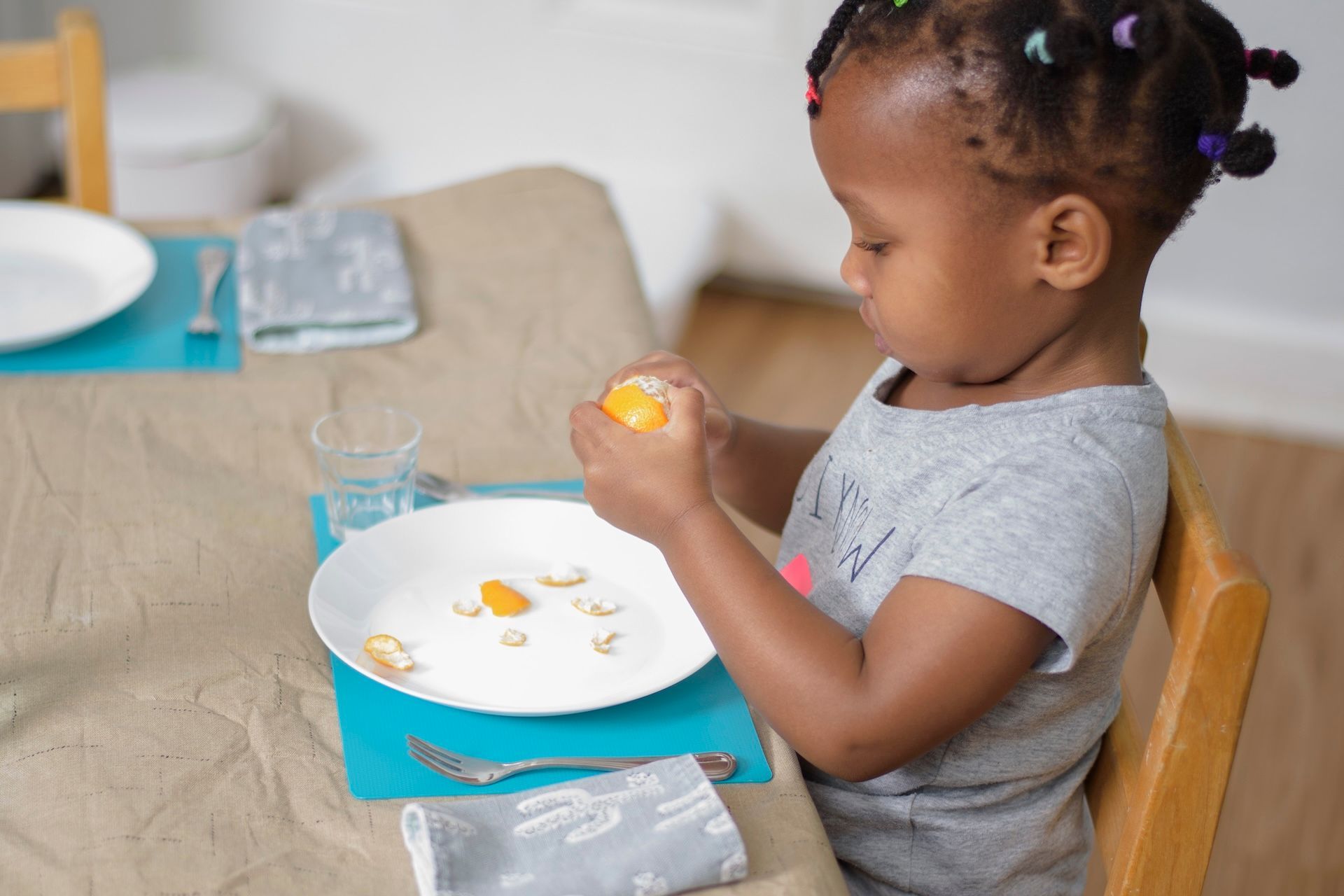
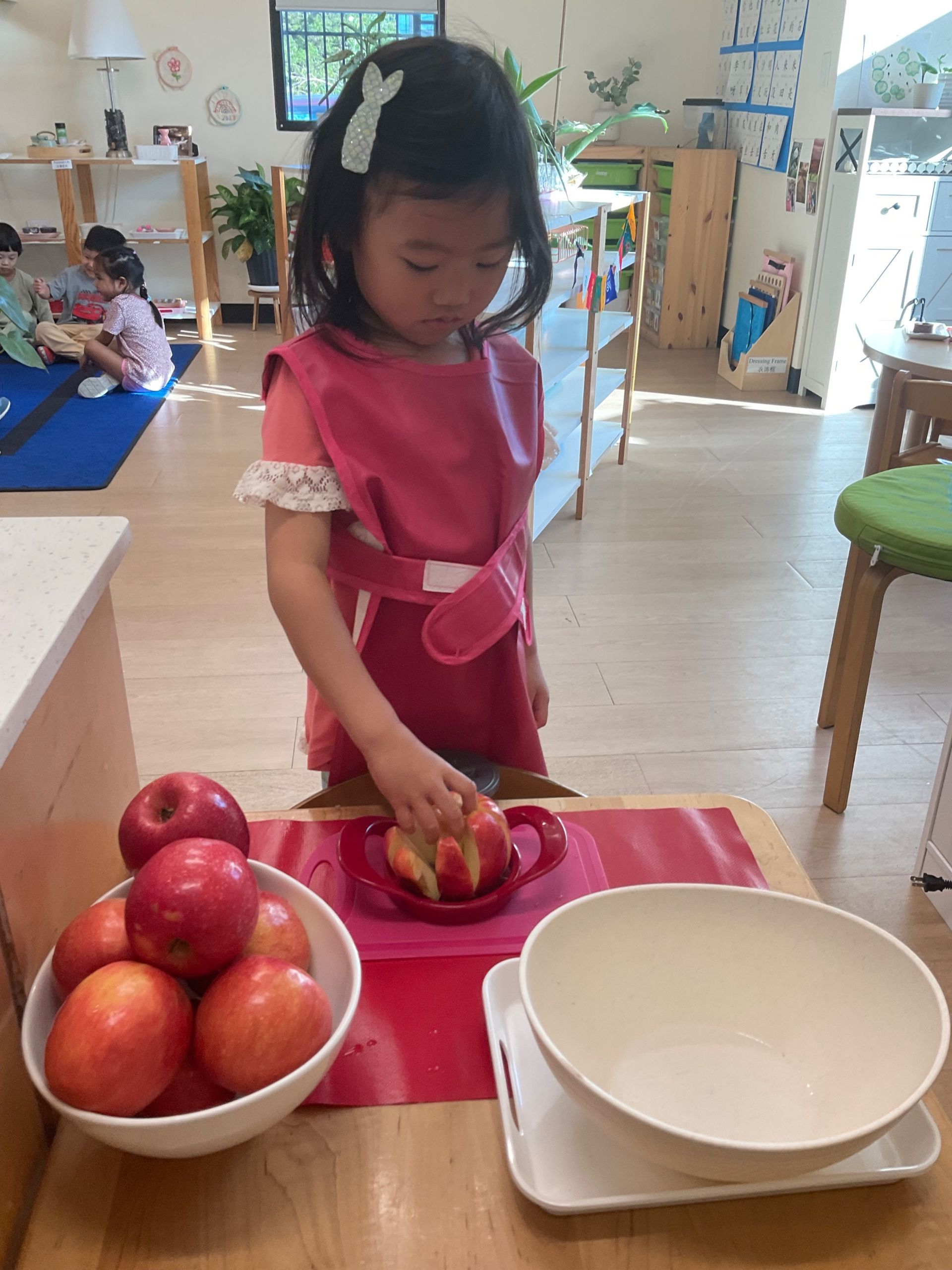
In our Toddler and Primary classrooms, grace and courtesy are taught as part of our Practical Life curriculum. Our guides give explicit, step-by-step demonstrations on fundamental social interactions, such as:
- How to walk carefully around a friend’s working mat on the floor
- How to gently place a hand on a guide’s arm to wait for a turn to speak
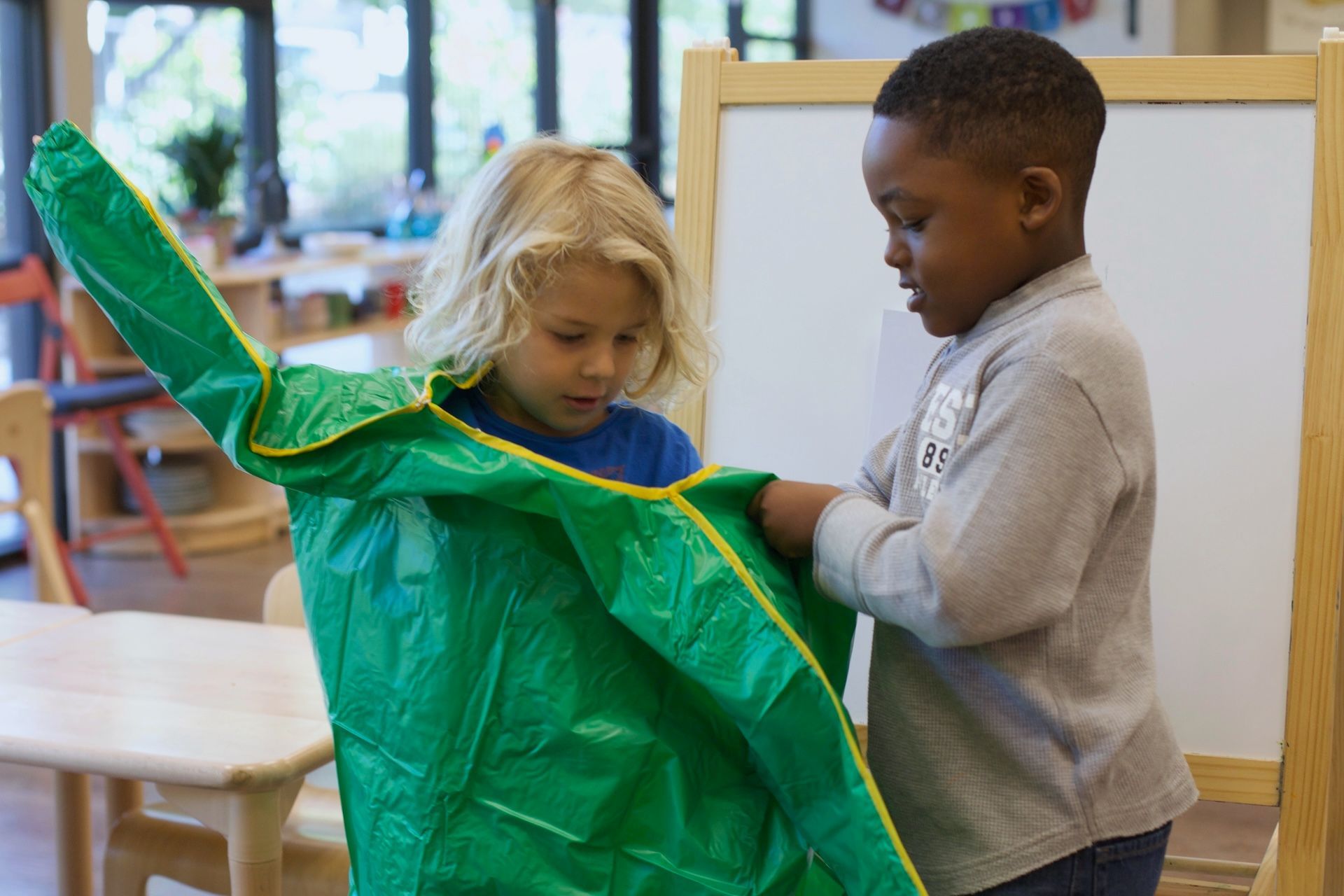
- How to offer help to a peer, tuck a chair under a table, or introduce oneself to a visitor
- How to quietly open and close a door or carry a glass pitcher with two hands
These lessons are offered individually or in small groups, frequently utilizing fun, lighthearted role-playing.
A Mindful Approach to Correction
We are very careful about how and when grace and courtesy lessons are presented. If a guide observes a behavior that needs addressing, we avoid confronting or publicly correcting the child in the moment. Grace and courtesy lessons are never given as a form of punishment or direct reprimand.
When children are singled out or corrected on the spot, they often feel embarrassed, unsafe, or defensive—making them far less likely to adopt the behavior authentically. Instead, our guides make a quiet mental note and present a graceful role-playing lesson to the individual or the class at a later, neutral time when everyone is calm and receptive.
Evolving with the Child: The Elementary Years
As children transition into our Elementary program, their social drive expands dramatically. Elementary-aged children are deeply focused on peer dynamics, justice, and navigating the ups and downs of friendships.
At this level, grace and courtesy work shifts to meet their expanding social awareness. Guides provide students with tools for:
- Communicating boundaries directly and respectfully
- Resolving peer conflicts through guided mediation
- Practicing discretion and empathy when someone experiences an embarrassing moment
- Acting as gracious hosts when visitors enter the classroom
Elementary students also take grace and courtesy into the broader Austin community through independent "Going Out" trips—learning how to contact community members, arrange transportation, and conduct themselves with dignity in public spaces.
The Goal: Courtesy from the Heart
The ultimate goal of Montessori grace and courtesy is that these actions become natural, intrinsic habits rather than forced compliance.
As Dr. Maria Montessori observed:
“…the essential thing is that [the child] should know how to perform these actions of courtesy when his little heart prompts him to do so, as part of a social life which develops naturally from moment to moment.”
Because these exercises are practiced routinely within our prepared environments, children learn social expectations in a atmosphere of scaffolding, trust, and mutual respect.
The Results in Action at LakeCreek
When you walk through the doors at LakeCreek Montessori School, the impact of grace and courtesy is visible in tiny, everyday moments:
- Two Primary students sitting on a rug, one patiently showing the other how to tie their shoes
- A student greeting an adult or guest in the hallway with a warm smile, direct eye contact, and a handshake
- A toddler rushing to bring a tissue to a crying friend or helping wipe up a water spill without being asked
- Children holding doors open, tucking chairs beneath tables, and moving through the classroom with quiet awareness of their peers
In learning these skills, LakeCreek students move far beyond superficial pleasantries. They grow into empathetic, self-possessed individuals who consider their impact on the world around them.
See Grace & Courtesy in Action
We invite you to observe our peaceful classrooms and see how intentional grace and courtesy lessons help children grow into caring, confident members of a supportive community.