Listening, Movement, and Literacy: How Music Unfolds in the Montessori Environment

At LakeCreek Montessori School, music is both a naturally interwoven part of our daily rhythm and its own rich area of exploration. Just as with language, mathematics, or practical life, our approach to music begins sensorially, isolates specific skills through precise lessons, and ultimately invites children into joyful, spontaneous self-expression.
Rather than treating music as an isolated, once-a-week special held in a separate room, we integrate music into the daily life of our classroom communities. Through this approach, every child develops a deep, lasting connection to tone, rhythm, and musical culture.
Sensorial Foundations & Daily Rhythm
In our Toddler and Primary environments, musical experiences begin through the senses. Before a child ever reads a musical note, they are developing auditory discrimination and sound awareness through their everyday environment.
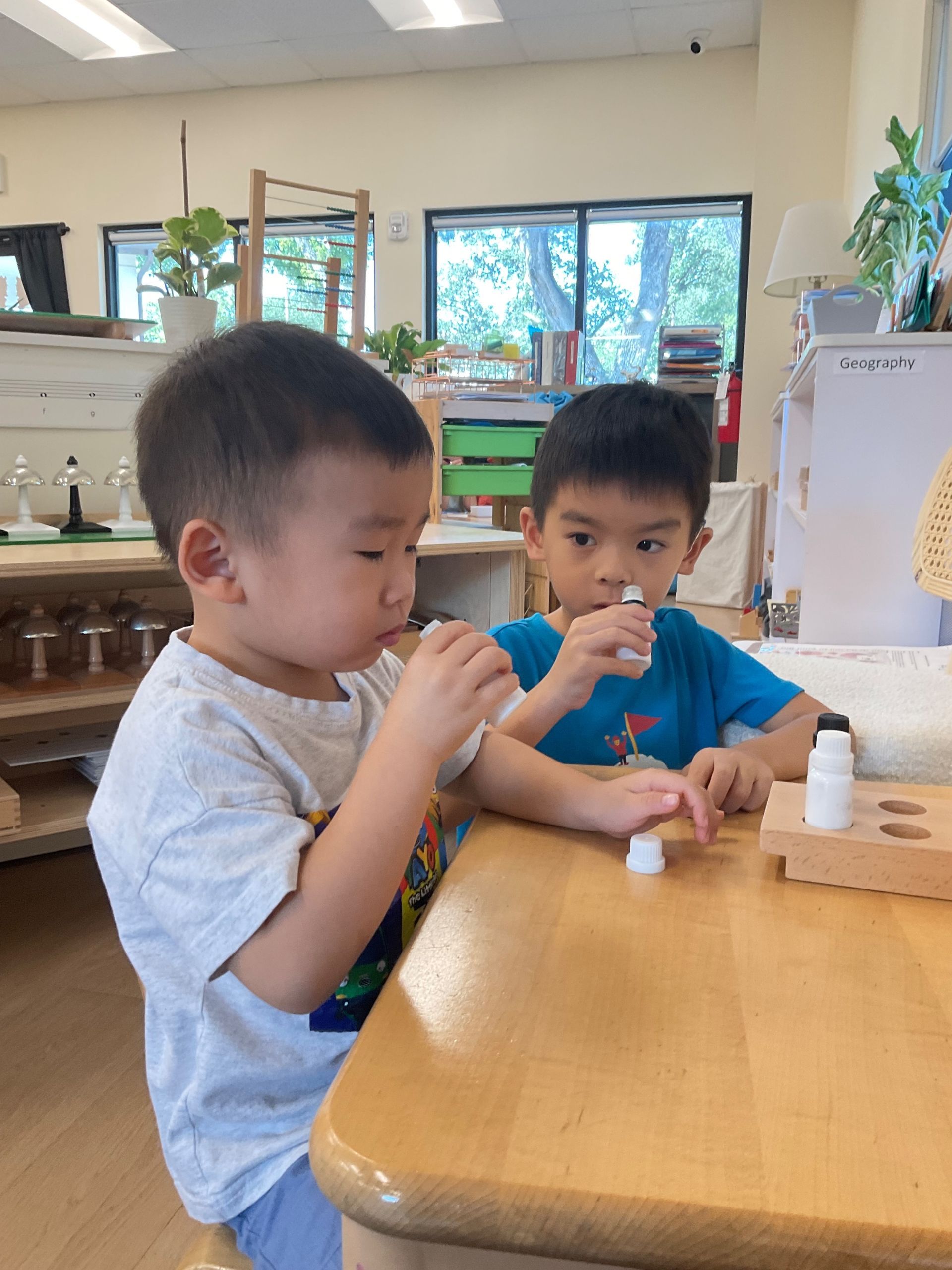
- Auditory Awareness in Daily Work: Children practice noticing subtle sounds throughout the morning, whether listening to the gentle snap of a dressing frame, feeling the delicacy required to place a glass vase onto a tray without making a sound, or pairing the Sound Cylinders by subtle gradations of volume.
- The Silence Game: During this classic Montessori experience, children sit in deep, quiet concentration, becoming attuned to the quietest sounds around them: a bird outside the window, their own steady breathing, or a soft breeze.
- Rhythm & Movement: Through walking on the line exercises, rhythmic chants, movement games, and fingerplays, children physically embody rhythm and tempo.
- Community Singing: We sing with our children every single day. Gathering together to sing builds community, supports language acquisition, and creates a joyful, shared culture within the room.
- Cultural Music & Listening: Children listen to recordings of music from diverse cultures around the world and love the hands-on challenge of identifying instruments strictly by their unique acoustic signatures.
Keys to Musical Literacy: The Montessori Bells
In our Primary classrooms, music literacy (the reading, writing, and playing of music) is introduced through a unique and beautiful Montessori material: The Montessori Bells.
Designed to isolate pitch without the visual distraction of a traditional keyboard layout, the bells allow young children to explore the relationship between musical sounds directly:
- Discriminating Pitch: Children begin sensorially by striking individual bells with a mallet, dampening the sound, and listening carefully.
- Pairing and Grading: Next, they match identical pitches across two sets of bells (one natural wood set, one color-coded set) and arrange them sequentially from lowest pitch to highest.
- Naming & Notation: Once pitches are familiar to the ear, guides introduce the names of the notes and connect them to the visual musical staff.
- Moveable Music Notation: Just as children use the Moveable Alphabet to compose words before their physical handwriting is fully refined, they use a specialized moveable music alphabet to write their own simple melodies onto a printed staff.
In Elementary environments, this foundation continues using Tone Bars, where children explore major and minor scales, key signatures, transposition, intervals, and harmony.
Music as a Living Language
Because music functions as a universal form of human expression, we honor its development just as we do spoken and written language. We recognize both a "spoken" stage and a "written" stage in a child's musical journey.
During the early stages, a child may spend time striking the bells or tone bars with no apparent melodic pattern. In Montessori, we view this with immense respect: it is the musical equivalent of a toddler babbling as they master speech.
Given time, freedom, and access to beautiful materials, children move naturally from this exploratory "babbling" stage to playing recognizable tunes, singing with pitch accuracy, and eventually writing their own original musical compositions. It is not uncommon to witness a child experience an "explosion" into music notation and performance, driven entirely by their own internal interest.
A Rich, Cultural Experience
Our musical curriculum encompasses music history, singing, creative movement, pitch discrimination, rhythm, timbre, form, and the physical science behind how sound travels.
By isolating difficulty and providing sequential preparation, young children gain the confidence to improvise and compose extemporaneously.
For some children, this early exposure ignites a lifelong calling toward music. For every child, it instills a deep appreciation for human culture, refined auditory awareness, and the confidence that comes from expressing oneself through sound.
Experience the Harmony of LakeCreek
We would love to welcome you into our prepared environments to see—and hear—our classroom communities in action.
Schedule a tour today!