What’s a Work Period? Your Questions Answered

"The mind takes some time to develop interest, to be set in motion, to get warmed up into a subject, to attain a state of profitable work. If at this time there is interruption, not only is a period of profitable work lost, but the interruption produces an unpleasant sensation which is identical to fatigue.”
-Dr. Maria Montessori, What You Should Know About Your Child
Consider, as an adult, what it takes for you to do your best work. What must your environment look like? What do you need from others? What constraints do you need removed in order to meet your goals?
Dr. Montessori spent years observing children as they played. She quickly recognized that immense learning takes place during play, leaving it reasonable to call it the child’s work. Left without interruptions, she witnessed pure magic.
Children, even very young children, have the capacity for intense concentration. They have the innate ability to work through problems and develop solutions all on their own. They want to do these things. And what’s even better? They do it with a sense of self-satisfaction, not because they feel pressure or expectation to.
What Montessori realized is that we, as adults, sometimes need to get out of kids’ way. We often imagine they require more help than they actually do, or that we must offer rewards or incentives to ensure they do their schoolwork, but those assumptions are misguided. What children really need is time, respect, and an environment in which they may focus deeply on their work.
Thus, the work period was born. Generally spanning about three hours long in the morning, this precious time is a cornerstone of Montessori education.
How does it begin?
The start of the work period varies, but typically it begins as children arrive in the morning. For some classes, on some days, and during some parts of the year, there may be a whole class morning meeting or circle time at the start or end of the work cycle.
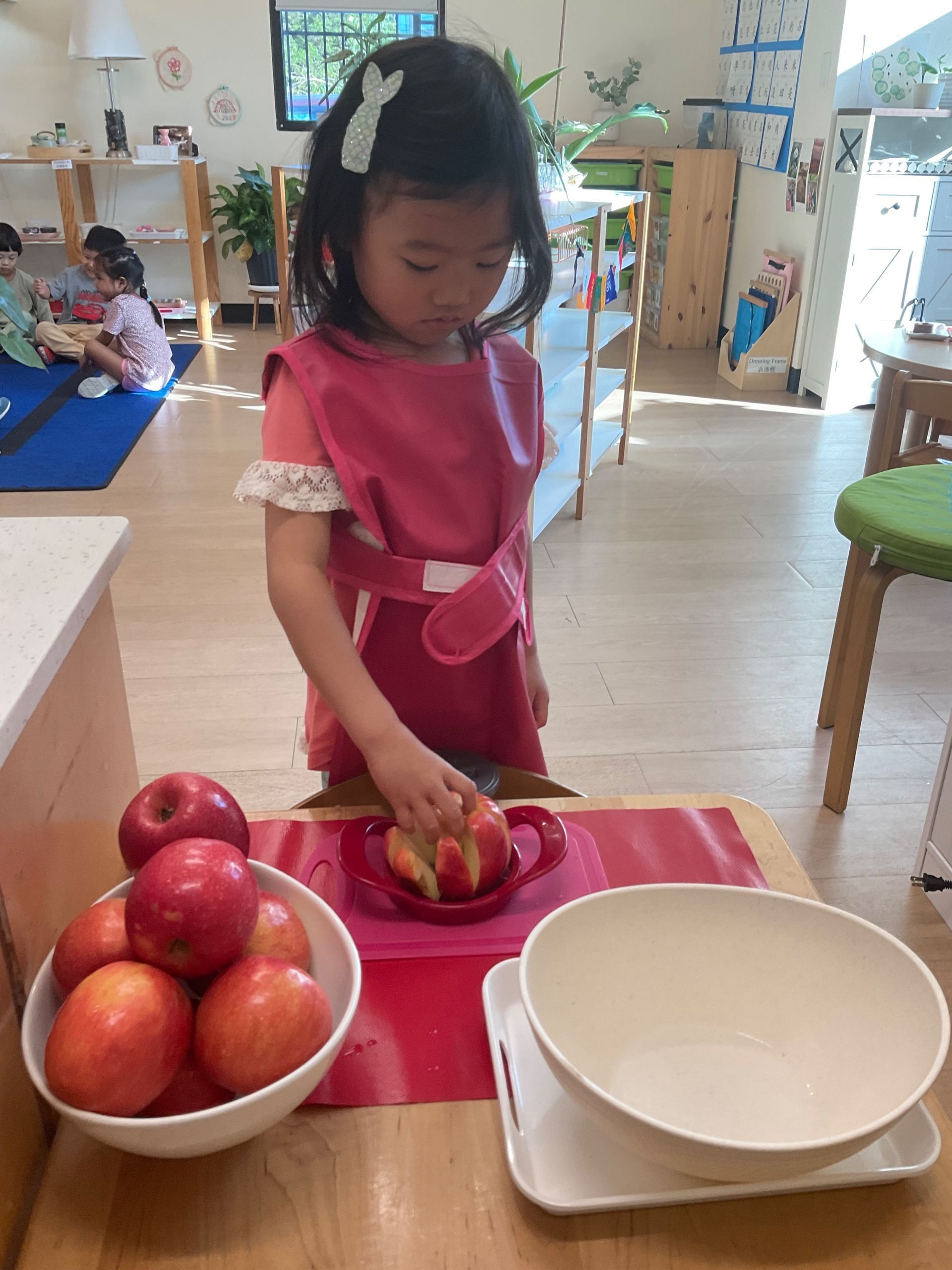
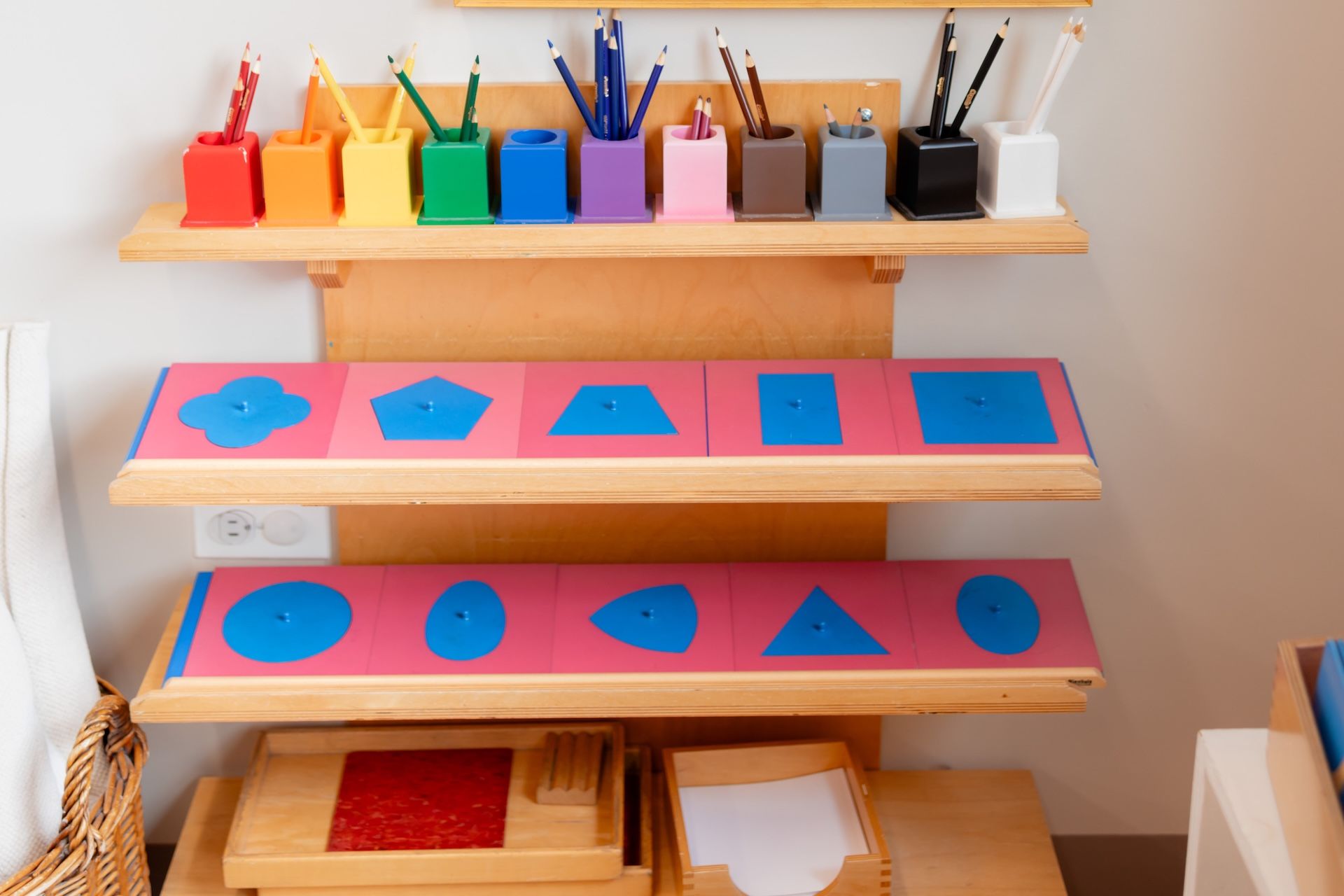
A typical day begins with the child putting away their belongings in a designated space, changing their shoes, and greeting their teacher as they walk into the room. They may say hello to a friend or two, take a moment to transition, and then select a work from the shelf. Others may be so eager to begin, they waste no time at all and go straight to the material they have been thinking about since the day before.
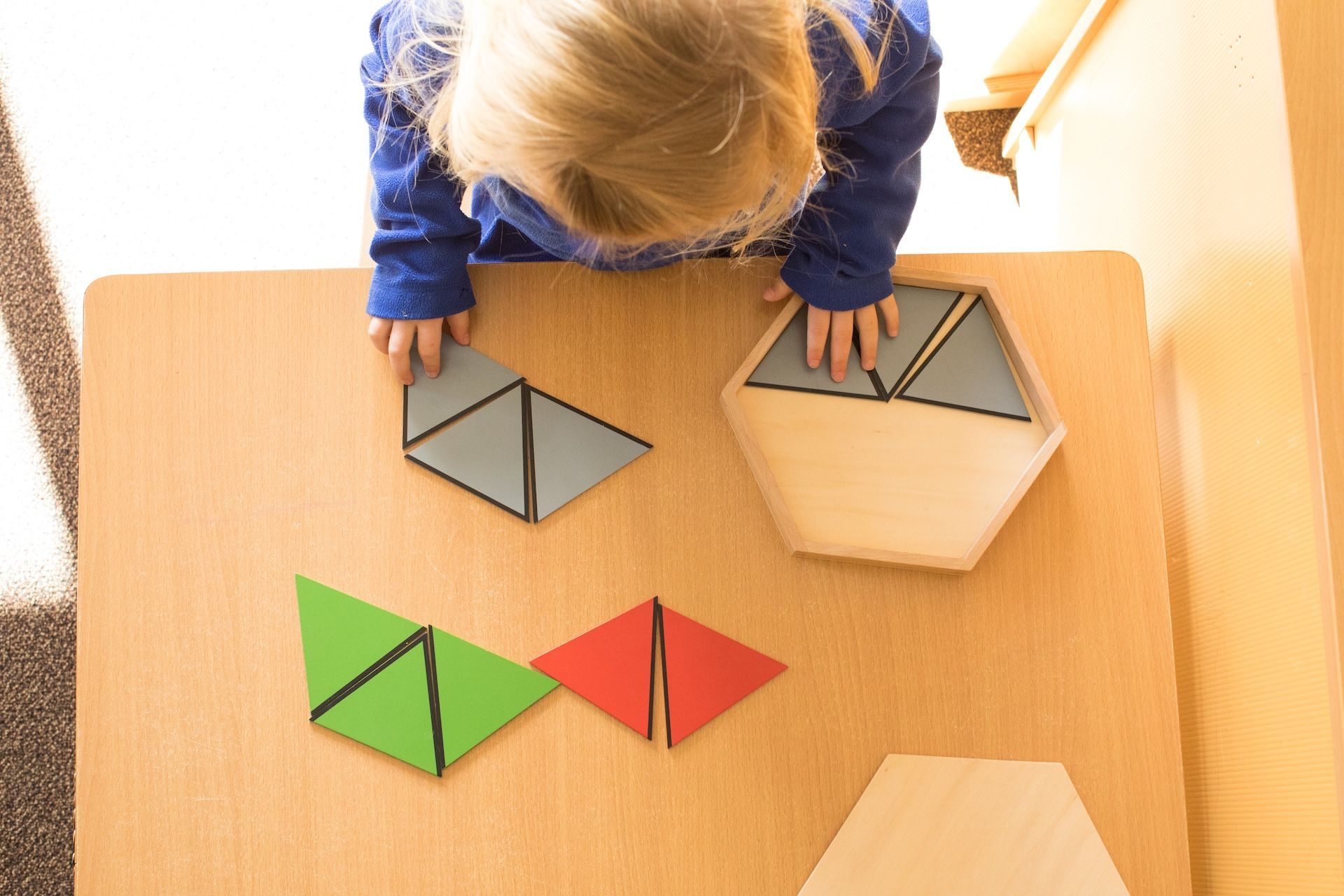
Prior to age six the child will likely work by themselves, but near their peers, most of the time. They may lay out a work rug, set up their material, and delve into a deeply concentrated state. They use the materials in the way they have been taught, then clean up and replace everything when they are done.
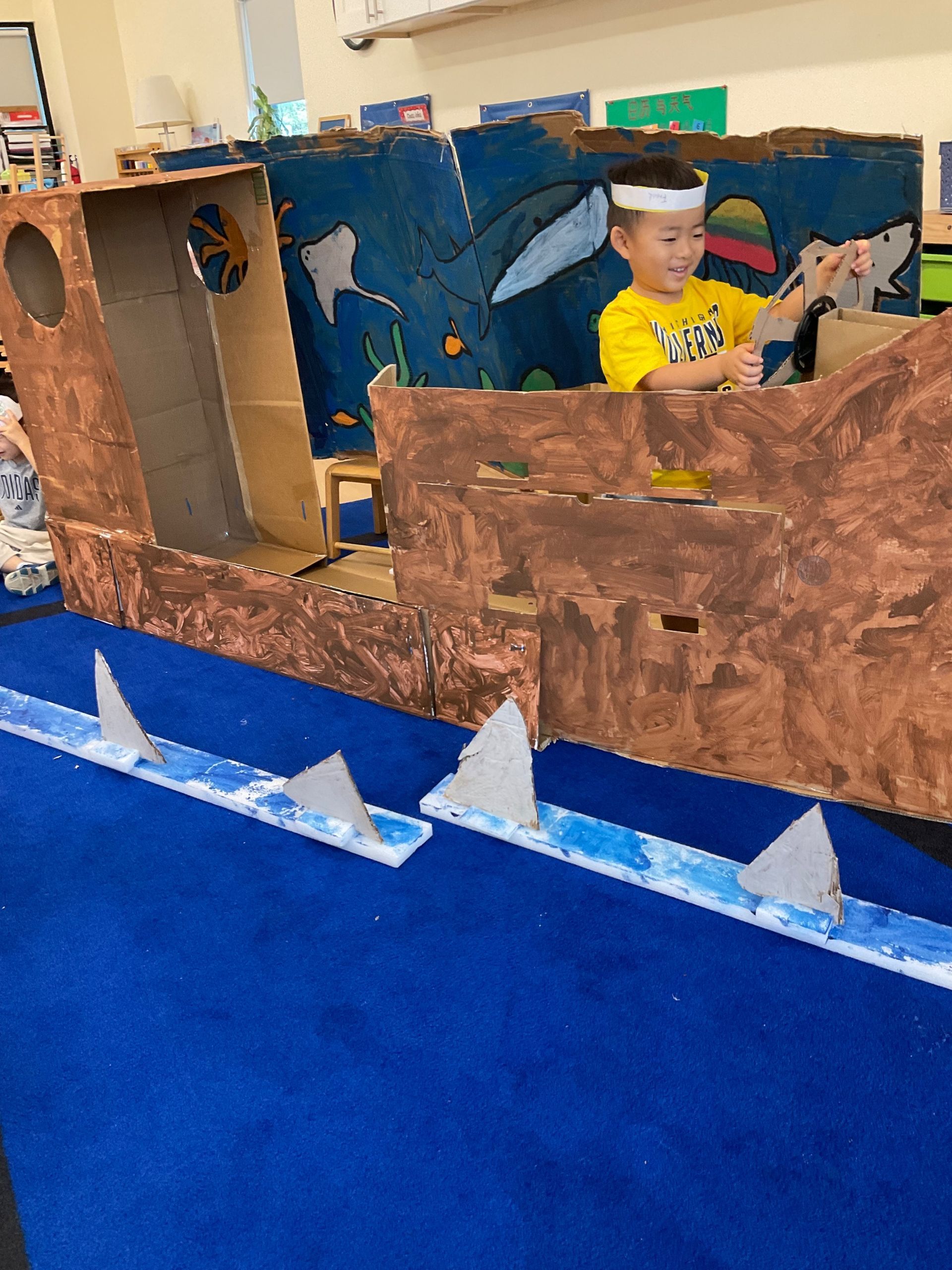
As children older than six, due to their development and desire for social connection, the start of the day can be a bit noisier and more chaotic. They still get to work rather quickly, although it’s often in the form of group or partner work.
What do the adults do?
A Montessori classroom typically has two adults present: the guide and an assistant. The assistant busies themselves with ensuring the room stays neat and orderly and that everything the children need is available to them. If children need help or redirection, the assistant is quick to engage while still allowing the child to maintain an appropriate level of independence.
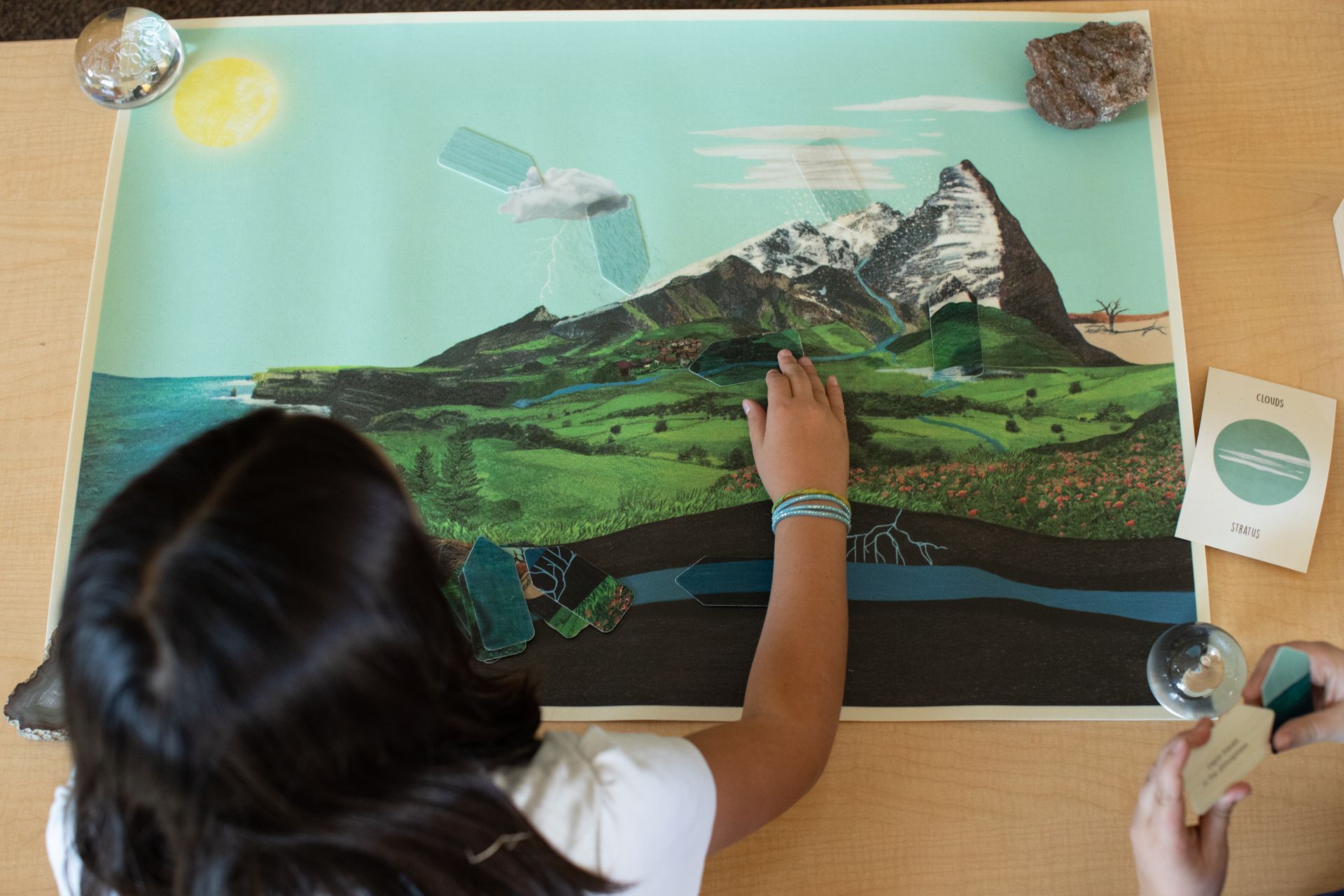
This allows the guide to focus on two main tasks: observation and presenting lessons. During the work period lessons are not given to the whole group; individuals or small groups of children work with the guide to learn or review skills and materials. This is done as unobtrusively as possible. Adults in a Montessori classroom do their best not to interrupt the work of a child. If they need to speak with a student, there is often a non-verbal structure in place, such as leaving a name tag beside the child as they are working. This alerts the child to check in with the guide whenever they complete the task they are focused on.
Do children really focus the entire time?
Not usually! Can any of us truly focus for three hours straight without breaks? We definitely don’t expect our students to, either. This is one of the reasons our environments are designed for students to meet their own needs independently, when the time is right for them. If they feel hungry, they are welcome to have a snack. If they need to use the restroom, they don’t need to ask permission. Even if they just need to get up and stretch their legs or look out a window - we do not prevent children from doing these things. Allowing for breaks lets us all focus better in the long run anyway.
There is one interesting phenomenon worth mentioning here. Sometime around 10:00-10:30 in the morning, toward the end of the work cycle, classroom communities often experience what we refer to as false fatigue . Like clockwork, the volume of the children’s voices will rise, there is noticeably less engagement with the materials, and fewer children are sitting in one place - rather they seem to be wandering around the room. The adult instinct is to ring a bell or clap and make a plea for re-engagement, but we have learned to hold back. False fatigue is a normal part of the flow of the day. If we pause, observe, and wait even two or three minutes, we will see the children find their way back into their work. It can be pretty amazing to observe.
What might one work period look like for an individual child?
This article has probably already given you a fairly good idea of what this might look like. Once the child completes their first work of the day, they begin another. This repeats for the duration of the morning, but is fractured by any number of other activities. The child will likely have a lesson or two with their guide while the rest of their classmates continue working independently. At some point, the child will get hungry, have a snack, and clean up after themselves. They may take several water breaks, socialize with friends, or even spend some time watching a squirrel climb a tree outside.
In short, the work period is a way to honor the child’s way to balance focused learning with meeting one’s own needs, on one’s own timetable. It’s a way to show the child we trust them, and our students absolutely rise to the occasion.
Curious to see what a morning work period looks like in action? We would love to have you visit. Reach out today to schedule a time to observe.